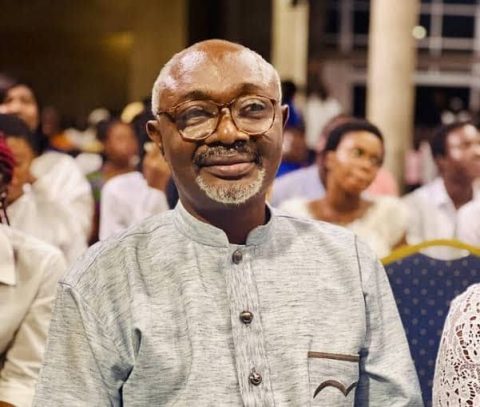
Ghanaian preacher Apostle Francis Amoako Attah has sparked public debate after predicting that Nigerians and Chinese nationals could gain significant control over parts of Ghana by 2032 if Ghanaians fail to protect the country's interests.
The founder and leader of Parliament Chapel International made the remarks during a church service, claiming that he had received a spiritual revelation in which Ghana was being put up for sale.
In a video circulating on social media, the apostle warned that some areas of the country could eventually become inaccessible to Ghanaians, with foreign nationals exercising considerable influence over those locations.
He called on Ghanaians to pray for the country and its leaders, arguing that the situation he described required urgent attention.
Apostle Says Ghana Could Become Like Abuja and Lagos
During his sermon, Apostle Amoako Attah specifically mentioned Nigerians and Chinese nationals as the foreign groups he believed could dominate parts of Ghana within the next six years.
He warned that some locations could develop into communities where Ghanaians might struggle to exercise access or control.
The preacher also suggested that wealthy foreign nationals could establish areas with significant private security arrangements, comparing the potential development to major Nigerian cities such as Abuja and Lagos.
He blamed what he described as Ghana's tendency to prioritise the prosperity of foreigners over the interests of its own citizens.
He further warned that the situation he envisioned could create conditions for military intervention in the country's political system.
His statements were presented as a spiritual prophecy rather than a prediction supported by economic or demographic evidence.
Prophecy Triggers Debate Over Foreigners and Ghanaian Interests
The comments have generated discussions about immigration, foreign investment, business ownership and the protection of Ghanaian economic interests.
Some social media users have criticised the prophecy, arguing that statements portraying entire nationalities as threats risk encouraging hostility towards foreigners living and working in Ghana.
Others have questioned the basis of the prediction and called for attention to be directed towards practical national challenges, including unemployment, weak local industries and the enforcement of existing investment regulations.
The debate has also attracted responses highlighting the presence of Ghanaians in other countries, including Nigeria, where Ghanaian professionals, traders and entrepreneurs participate in economic activities.
These reactions have reinforced calls for mutual respect and fair treatment between Ghanaian and Nigerian communities.
Dangote's Proposed Ghana Investments Enter the Conversation
The discussion has also coincided with renewed attention on Nigerian billionaire Aliko Dangote's proposed investments in Ghana.
At the Invest Ghana Summit in Accra on November 16, 2026, Dangote disclosed that his group was in discussions with the Ghanaian government about establishing sugar and cocoa processing facilities.
He indicated that the proposed sugar project could create approximately 50,000 jobs, while discussions were also ongoing with COCOBOD regarding a cocoa processing plant.
President John Dramani Mahama welcomed the proposed investment, describing it as an example of how African businesses can expand across national borders and support industrial development.
The discussions illustrate the distinction between foreign economic participation and the kind of national takeover described in the preacher's prophecy. Proposed investments, by themselves, do not establish that foreign nationals are taking control of Ghanaian territory or restricting citizens' access to communities.
Calls for Practical Solutions to Ghana's Economic Challenges
Beyond the controversy surrounding the prophecy, the debate has renewed attention on the need to strengthen Ghanaian businesses and create more employment opportunities.
Some voices have argued that religious institutions and other influential organisations could contribute more directly to national development through productive investments, including factories and agro-processing businesses.
Rev. John Kofi Bosomtwe has also been cited in discussions advocating church-led industrial initiatives as a way of creating jobs and strengthening local production.
The wider conversation raises questions about how Ghana can protect local businesses, enforce investment laws and attract responsible foreign investment without creating hostility towards people from other countries.
A Prophecy, Not an Established Forecast
Apostle Amoako Attah's prediction has placed immigration and foreign economic influence at the centre of a fresh national conversation.
However, his claim that Nigerians and Chinese nationals will dominate Ghana by 2032 remains an unverified religious prophecy. No evidence presented with the circulating video establishes that such a takeover is planned or inevitable.
As discussions continue, attention is likely to remain on the balance between protecting Ghanaian economic interests, encouraging local industrial development and maintaining constructive relations with foreign nationals who contribute to the country's economy.



Comments (0)
No comments yet.
Only registered readers can comment.
Sign in or create a free account to join the discussion.