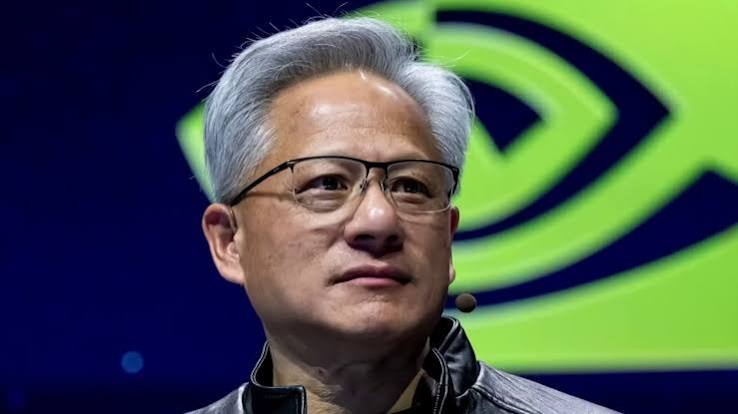
A growing campaign backed by Elon Musk, technology executives and thousands of self-identified Nvidia employees is calling for Jensen Huang to return as chief executive of the world's leading AI chipmaker, following his resignation amid a controversy involving alleged personal relationships and possible Chinese intelligence connections.
The campaign has intensified despite Nvidia's board making clear that it is not considering reinstating the company's longtime leader.
Huang stepped down on November 12, 2026, after reports about his relationships with a Chinese businesswoman and an Nvidia employee triggered corporate scrutiny and raised questions about potential national-security implications.
The controversy has become one of the most significant leadership crises in the artificial intelligence industry, given Huang's central role in building Nvidia into a dominant supplier of the processors powering the global AI boom.
Elon Musk and technology leaders support Huang's return
The campaign, operating under the banner "Stand With Jensen", has attracted support from prominent figures in the technology industry.
Tesla and SpaceX CEO Elon Musk has backed the effort, while other supporters include Replit CEO Amjad Masad and Epic Games CEO Tim Sweeney.
Musk has also suggested that he would be willing to hire Huang himself if Nvidia does not bring him back.
The campaign's open letter calls on Nvidia's board to reconsider its position while an independent investigation establishes the facts surrounding the controversy.
According to figures reported by Reuters on November 16, the petition had attracted more than 180,200 signatures. Its website also showed over 8,800 people identifying themselves as current Nvidia employees and more than 94,000 identifying themselves as shareholders.
Those professional affiliations were self-reported and had not been independently verified.
Supporters argue that Huang's leadership, industry relationships and contribution to Nvidia's technological development make his departure a major concern for the company.
Nvidia board rejects calls for reinstatement
Despite the growing campaign, Nvidia's board has indicated that it is not considering bringing Huang back as chief executive.
Board Chair Harvey Jones reportedly told investors that Huang had left voluntarily and would not be rehired.
The company is instead concentrating on identifying a permanent successor and maintaining operational stability during the leadership transition.
Chief Financial Officer Colette Kress has taken over as interim CEO while the succession process continues.
The board's position has created a divide between supporters who want Huang reinstated and those who believe the company must prioritise governance, accountability and the outcome of ongoing investigations.
Controversy raises questions about possible Chinese intelligence connections
The circumstances surrounding Huang's departure have attracted attention from US lawmakers and intelligence officials.
Reports identified a Chinese businesswoman, Alice Huang, with whom the former CEO acknowledged having an intimate relationship. US intelligence agencies are investigating her possible connections to China's Ministry of State Security and whether information may have been passed to Beijing.
The investigation also concerns Nvidia's business relationships and the movement of advanced artificial intelligence chips into China.
However, the allegations have not been established as proven findings. Chinese authorities have denied that Alice Huang is a spy, while US Attorney General Todd Blanche said the Justice Department had not reached a conclusion on the matter.
Nvidia previously announced an independent investigation into whether its founder had been targeted by a foreign intelligence operation.
The company said at the time that it had no reason to believe national security or Nvidia's confidential information had been compromised.
Palmer Luckey highlights China's chip ambitions
The debate has also attracted commentary from Anduril Industries founder Palmer Luckey, who has linked the controversy to the broader competition between the United States and China over advanced semiconductor technology.
Luckey has argued that China's restrictions and delays affecting imports of Nvidia processors could benefit Beijing's efforts to develop its own domestic chip industry.
The argument reflects a wider strategic disagreement over whether allowing Chinese companies access to American AI processors strengthens US technology businesses or risks accelerating China's technological capabilities.
Huang had previously supported maintaining access to the Chinese market, arguing that US companies should remain competitive internationally.
His departure could therefore have implications beyond Nvidia's internal leadership structure, particularly as Washington reviews its approach to advanced semiconductor exports.
Huang says he would consider returning
Despite stepping down, Huang has indicated that he would be willing to return if Nvidia's board believed it was in the company's best interests.
Speaking during the unfolding controversy, he said he would be honoured to resume the position if the board determined that doing so would benefit the company, its shareholders, employees and the United States.
His comments have encouraged supporters who believe the leadership question should remain open until the investigations are completed.
However, Nvidia's board has maintained its position against reinstatement.
Huang has also agreed to appear before several US House committees on December 1, 2026, for a transcribed interview concerning the company's China business and the national-security questions surrounding the controversy.
Nvidia faces leadership uncertainty amid market pressure
The leadership dispute has added uncertainty to Nvidia's position in the financial markets.
Reuters reported that the company lost approximately $800 billion in market value following the emergence of the controversy, as investors assessed the potential consequences of Huang's departure and the investigations.
Nvidia's importance to the AI industry makes the leadership transition particularly significant. Its graphics processing units (GPUs) are widely used to train and operate advanced AI models, while its software ecosystem has become an important part of the global computing infrastructure.
Huang co-founded Nvidia more than three decades ago and played a central role in transforming it from a graphics-chip manufacturer into one of the most influential companies in artificial intelligence.
For investors, the immediate challenge is determining whether the company can maintain its technological direction, customer relationships and business momentum under new leadership.
A defining moment for Nvidia
The campaign to reinstate Huang demonstrates the influence he has built across Silicon Valley, the semiconductor industry and Nvidia's global business network.
Nevertheless, the board faces a different set of considerations, including corporate governance, national-security scrutiny and the need to establish a stable leadership structure.
Whether Huang eventually returns remains uncertain. For now, Nvidia is moving ahead with its succession process while the independent investigation and congressional scrutiny continue.
The outcome could have consequences not only for Nvidia but also for the wider artificial intelligence industry and the ongoing US-China competition over advanced computing technology.



Comments (0)
No comments yet.
Only registered readers can comment.
Sign in or create a free account to join the discussion.