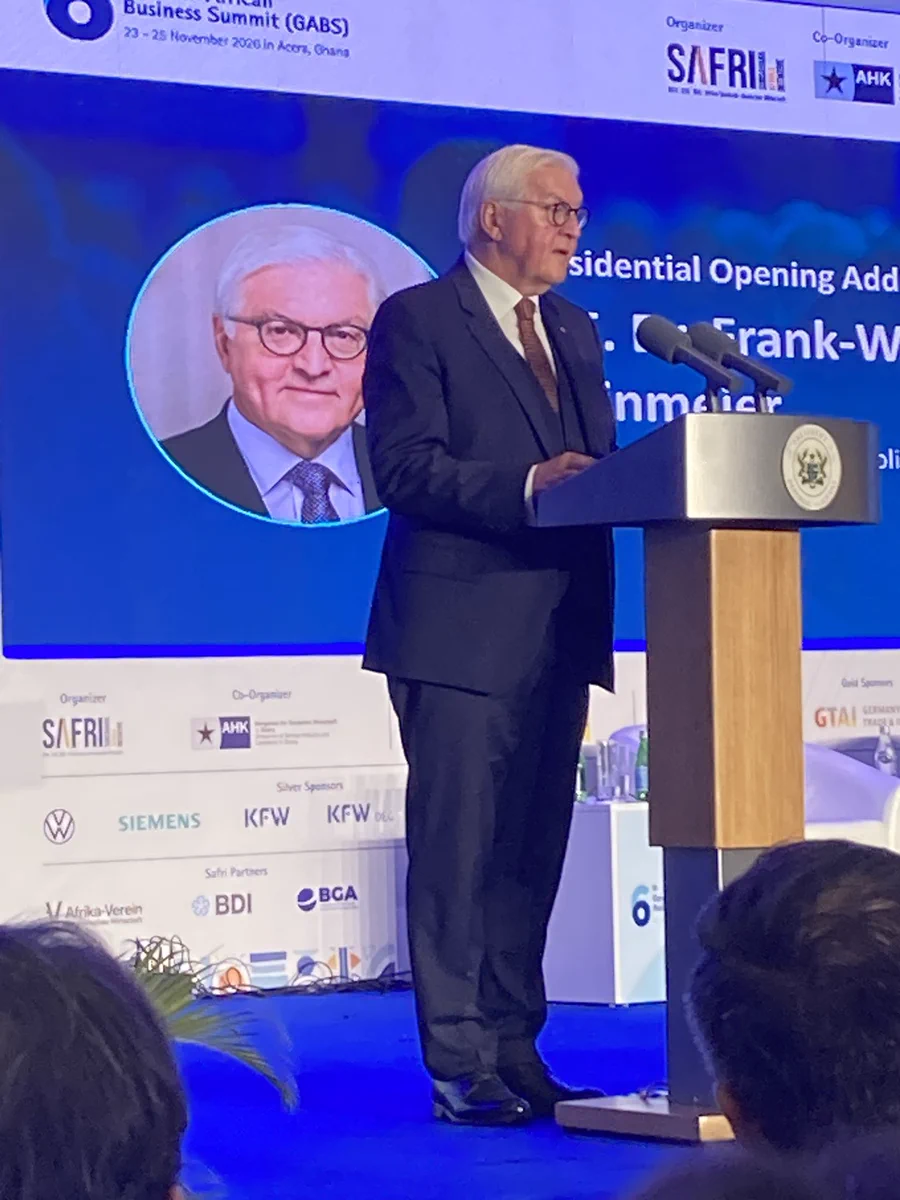
German President Frank-Walter Steinmeier has visited Ghana for high-level talks with President John Dramani Mahama, with both countries seeking to deepen economic cooperation through trade, investment, manufacturing and skills development.
Steinmeier arrived in Accra on Monday night, November 23, 2026, accompanied by a German business delegation. His visit forms part of a five-day African tour covering Côte d’Ivoire, Ghana and Kenya.
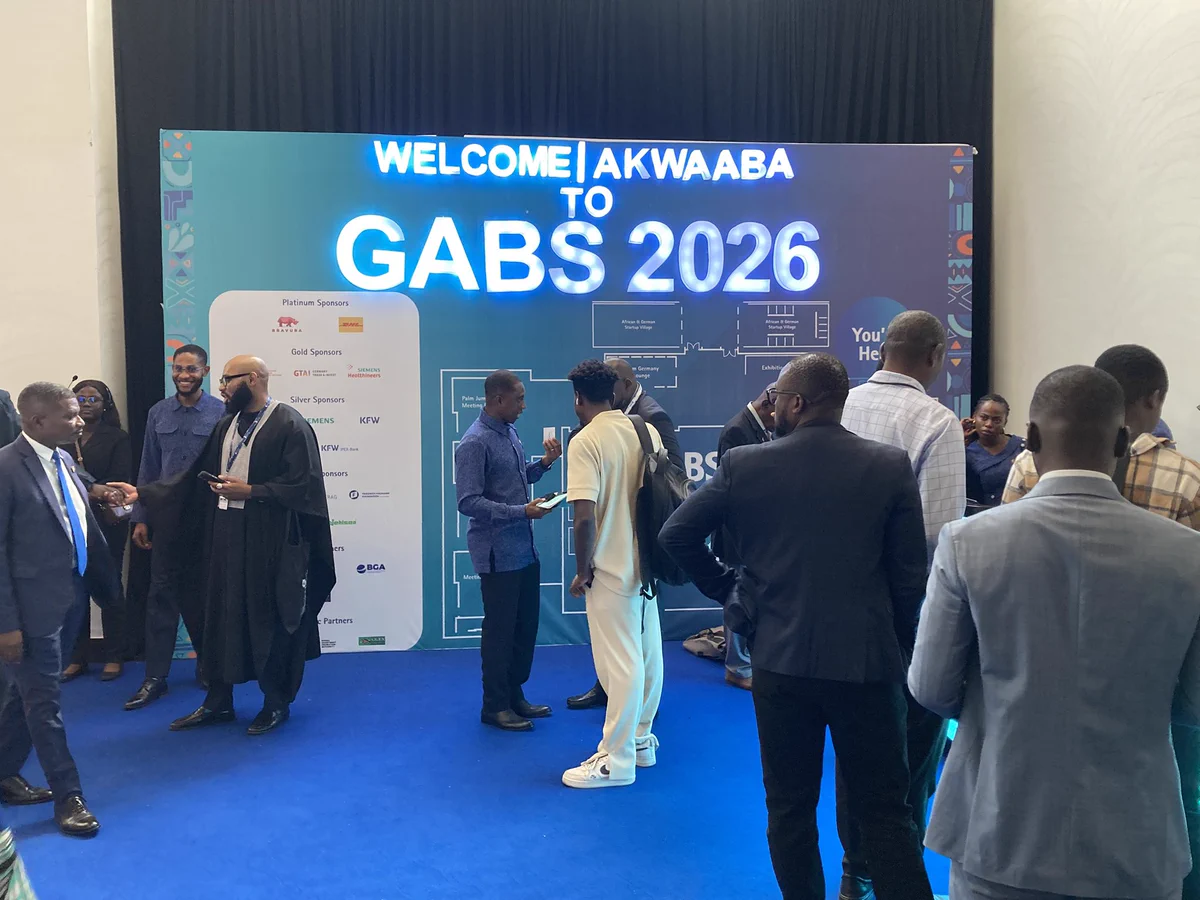
On Tuesday, November 24, he held discussions with President Mahama at the Presidency before joining him for the opening of the sixth German-African Business Summit (GABS 2026) in Accra.
The summit, running from November 23 to 25 at the Kempinski Hotel Gold Coast City, has brought together business executives, investors, policymakers and industry leaders from Germany and across Africa to explore opportunities for stronger commercial partnerships.
Mahama calls for investment in manufacturing and local processing
Addressing the summit, President Mahama urged Germany to support Africa's industrial transformation by investing in manufacturing, infrastructure and the local processing of agricultural products and mineral resources.
He argued that Africa must move beyond exporting unprocessed raw materials and develop industries capable of producing competitive finished goods for international markets.
Mahama said German investment, technology, innovation and technical expertise could help African countries improve productivity, strengthen skills development and expand their manufacturing capacity.
He also called for stronger partnerships between African and German businesses, emphasising the importance of converting investment opportunities into employment, industrial growth and shared prosperity.
The President said African governments must also strengthen their institutions, maintain consistent policies and create an environment that attracts responsible long-term investment.
Steinmeier urges Africa to strengthen trade and remove barriers
Steinmeier encouraged African governments to continue implementing economic reforms, facilitate trade between countries and develop new trade routes.
He identified the African Continental Free Trade Area (AfCFTA) as an important instrument for improving economic integration and expanding commercial opportunities across the continent.
The German President also urged German companies to explore investment opportunities in African markets, describing the continent as an important partner for future economic cooperation.
He noted that trade between Germany and African countries had increased by approximately 10 per cent in 2025, reaching a record level, although considerable opportunities remained untapped.
Steinmeier said stronger economic partnerships could benefit both regions by creating business opportunities, supporting employment and diversifying international trade relationships.
Skills development and technology among key priorities
The discussions at the summit covered several sectors considered important to Africa's economic future, including renewable energy, green hydrogen, digitalisation, artificial intelligence, automotive development, mining, trade finance and industrialisation.
Skills development also featured prominently in the broader diplomatic engagement, reflecting Germany's interest in expanding cooperation on vocational training and workforce development.
Ghana is seeking to attract German expertise and investment to strengthen its industrial base while creating more opportunities for local businesses and workers.
The summit provides a platform for Ghanaian companies to engage German investors, explore technology partnerships and establish commercial relationships that could support local production.
A renewed chapter in Ghana-Germany relations
The visit forms part of broader efforts to strengthen diplomatic and economic relations between Ghana and Germany, which have maintained diplomatic ties since 1957.
Ghana's Foreign Affairs Minister, Samuel Okudzeto Ablakwa, has also called for deeper cooperation in renewable energy, solar power and nuclear energy, alongside trade, investment, institutional partnerships and skills development.
Steinmeier's programme in Ghana also included a visit to the United Nations World Food Programme's humanitarian logistics hub in Accra before his departure for Nairobi, Kenya.
The engagements have placed renewed attention on the potential for Ghana and Germany to move beyond traditional diplomatic relations towards practical economic partnerships that support industrial development, investment and job creation.
For Ghana, the central challenge will be ensuring that investment commitments translate into local manufacturing capacity, technology transfer, skills development and greater value addition to the country's natural resources.

Comments (0)
No comments yet.
Only registered readers can comment.
Sign in or create a free account to join the discussion.