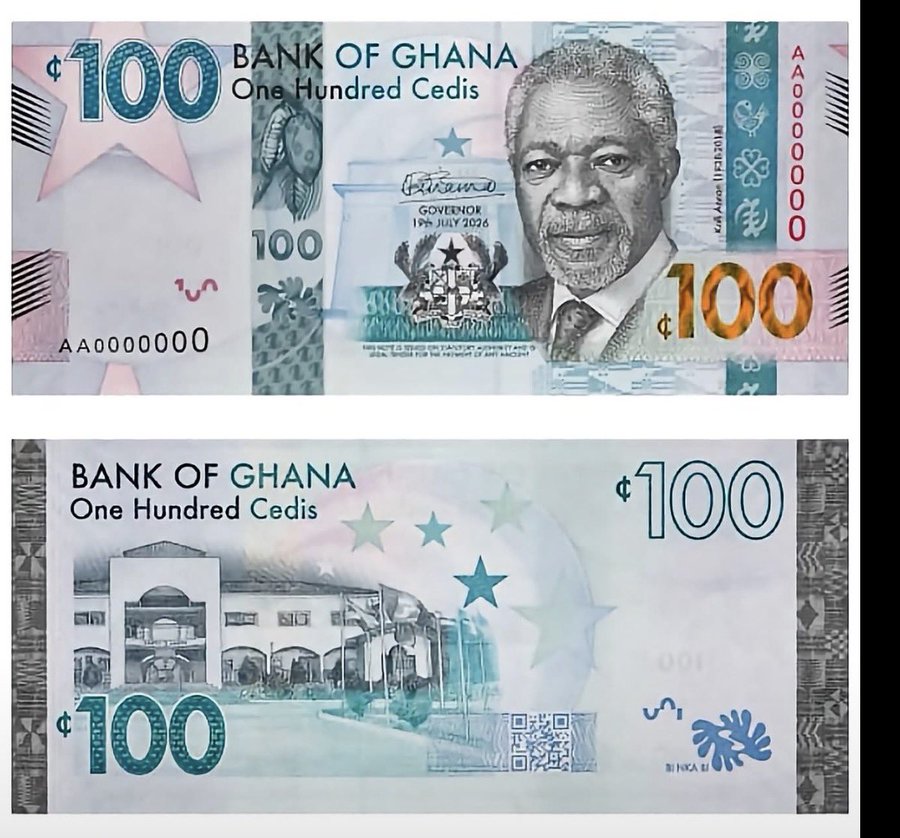
The Bank of Ghana (BoG) has officially launched a redesigned series of Ghanaian banknotes known as the Ghana Cedi Heritage Series, featuring prominent national personalities, historic landmarks and traditional Adinkra symbols.
The new currency series was unveiled on Thursday, November 12, 2026, at the Bank of Ghana headquarters in Accra, with President John Dramani Mahama participating in the launch.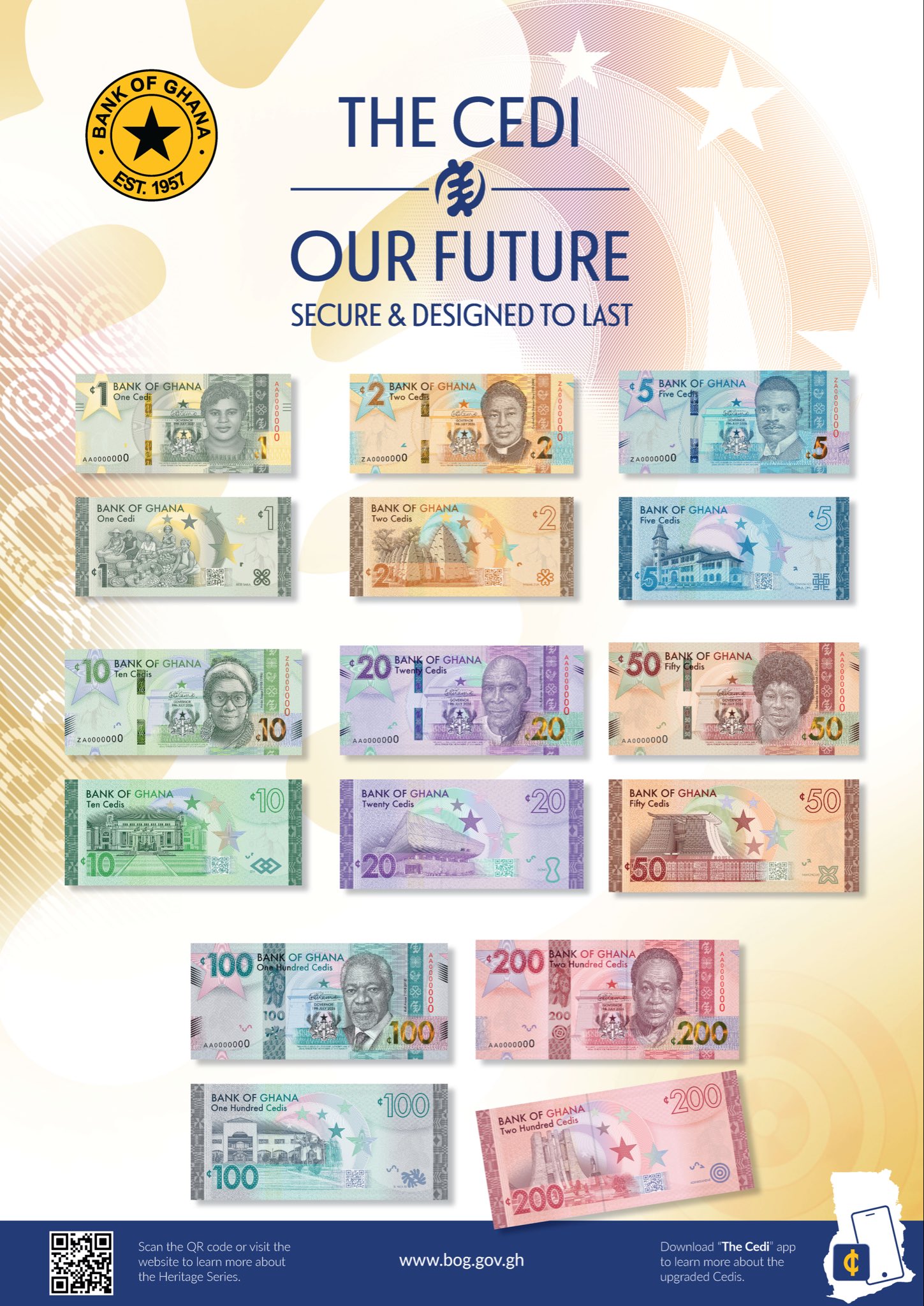
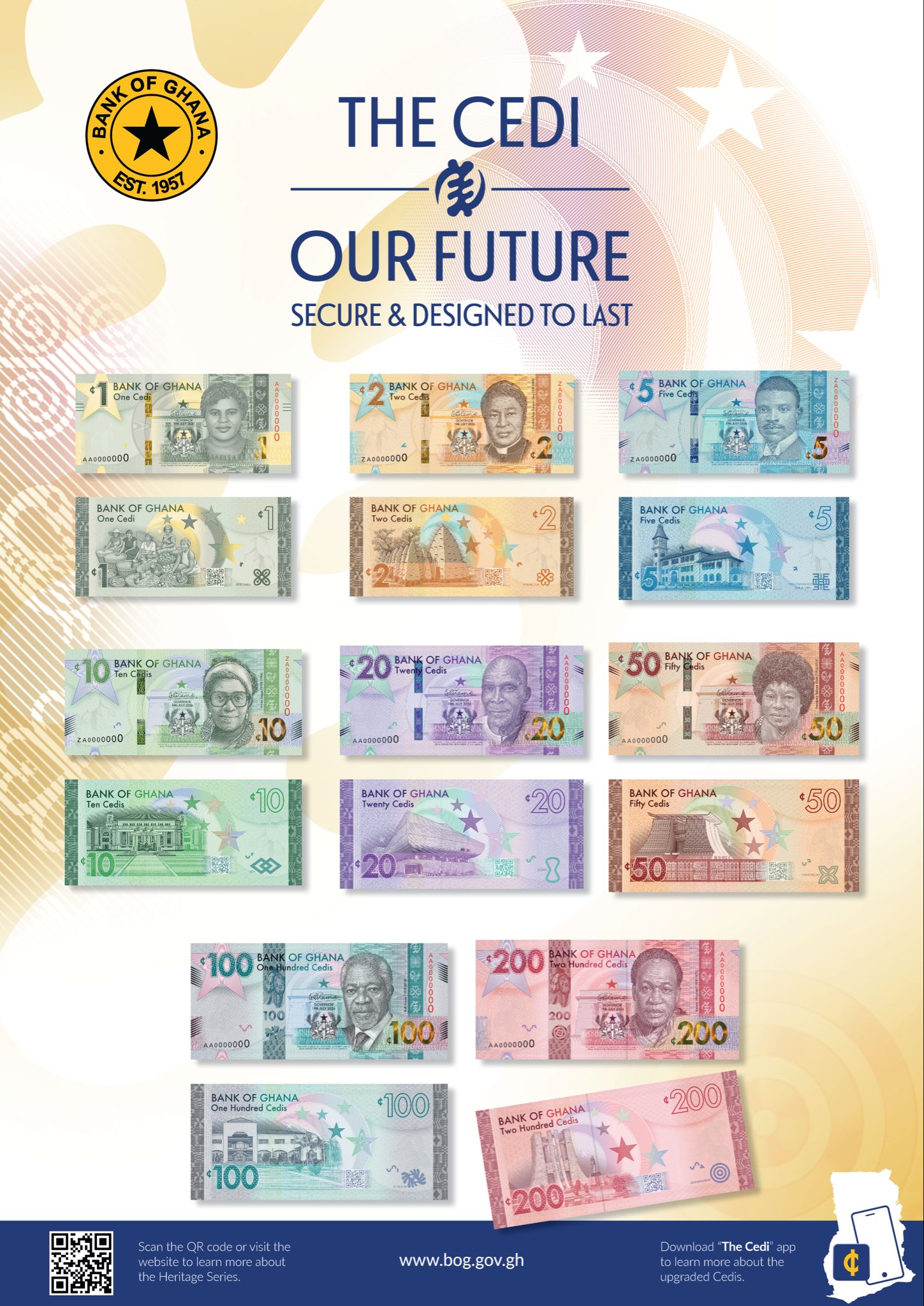
The redesigned banknotes retain Ghana's eight existing denominations, ranging from GH¢1 to GH¢200, while introducing improved security features, enhanced durability and smaller, more convenient sizes.
The new notes are scheduled to enter circulation on December 1, 2026.
According to the Bank of Ghana, the initiative seeks to modernise the country's currency, strengthen protection against counterfeiting and celebrate the historical personalities and cultural heritage that have shaped Ghana's identity.
Eight Ghanaian Personalities Featured on the New Cedi Notes
One of the most notable changes is the introduction of individual portraits celebrating eight personalities whose contributions span commerce, religion, education, justice, culture, diplomacy and national independence.
The personalities featured across the new denominations are:
GH¢1 – Agnes Oforiwaa Tagoe-Quarcoopome
The GH¢1 note features Agnes Oforiwaa Tagoe-Quarcoopome, a pioneering market woman associated with Makola Market and Ghana's commercial history. Her inclusion recognises the contribution of women traders to the country's economy.
GH¢2 – Cardinal Peter Poreku Dery
The GH¢2 note honours Cardinal Peter Poreku Dery, a prominent Ghanaian Catholic leader whose influence extended across religious and community life.
GH¢5 – James Emman Kwegyir Aggrey
The GH¢5 note celebrates James Emman Kwegyir Aggrey, an influential Ghanaian educator and Pan-Africanist remembered for his contribution to education and intellectual development.
GH¢10 – Justice Annie Ruth Jiagge
The GH¢10 note features Justice Annie Ruth Jiagge, Ghana's pioneering female judge and an important figure in the advancement of women's rights and justice.
GH¢20 – Dr Ephraim Amu
The GH¢20 note honours Dr Ephraim Amu, a renowned composer, educator and cultural icon whose contributions to Ghanaian music and national identity remain significant.
GH¢50 – Theodosia Salome Okoh
The GH¢50 note features Theodosia Salome Okoh, the designer of Ghana's national flag, recognising her contribution to one of the country's most important national symbols.
GH¢100 – Kofi Annan
The GH¢100 note celebrates the late Kofi Annan, Ghana's former United Nations Secretary-General and Nobel Peace Prize laureate, whose international diplomatic career earned him global recognition.
GH¢200 – Dr Kwame Nkrumah
The highest denomination, GH¢200, features Ghana's first President, Osagyefo Dr Kwame Nkrumah, whose leadership was central to the country's independence in 1957.
National Landmarks and Adinkra Symbols Added
Beyond the individual portraits, the Heritage Series incorporates important national landmarks and cultural symbols to give each denomination a distinct historical identity.
The designs include Makola Market, Larabanga Mosque, Achimota School, the Supreme Court, the National Theatre, Jubilee House, the Kofi Annan International Peacekeeping Training Centre and the Kwame Nkrumah Memorial Park.
Traditional Adinkra symbols have also been incorporated into the new notes, adding another dimension to the country's cultural representation on its currency.
The Bank of Ghana says the designs are intended to make the cedi a reflection of Ghana's history, achievements and shared national identity.
Improved Security and Durability
The redesigned banknotes also introduce changes aimed at improving their quality and protecting the currency against counterfeiting.
According to the Bank of Ghana, the notes feature enhanced security elements and reinforced cotton-based material designed to withstand frequent handling and everyday transactions.
The redesigned notes are also smaller than their predecessors, making them easier to carry and store.
Governor of the Bank of Ghana, Dr Johnson Pandit Asiama, explained that the improvements form part of broader efforts to strengthen confidence in the national currency and reduce the cost associated with replacing damaged banknotes.
The central bank has also encouraged the public to handle the new notes carefully by avoiding unnecessary folding, stapling, writing and other practices that could damage them.
Old Cedi Notes Will Remain Legal Tender
The Bank of Ghana has assured the public that the introduction of the Heritage Series does not mean existing banknotes will immediately become invalid.
The old and redesigned notes will circulate together from December 1, 2026, allowing individuals, businesses and financial institutions sufficient time to adjust.
The central bank has advised the public against rushing to banks to exchange their existing money for the new notes.
The gradual introduction is intended to prevent unnecessary disruption to economic activities and ensure a smooth transition.
Mahama Says New Notes Will Bring Ghana's History to Everyday Life
President John Dramani Mahama described the new banknotes as an opportunity to bring Ghana's history and cultural heritage into the everyday lives of citizens.
He emphasised that currency represents more than a medium of exchange, noting that it also reflects a country's identity, history and institutional confidence.
The President urged Ghanaians to handle the cedi with pride and appreciate the personalities and national achievements represented on the new notes.
The launch also provided an opportunity to highlight Ghana's monetary history, from the cowrie shells and traditional gold weights used in earlier trading systems to the modern cedi.
Public Discussion Over the Choice of Personalities
The new banknotes have also generated public discussion about the personalities selected to represent Ghana's national heritage.
While some have welcomed the recognition of individuals from different sectors of national life, others have questioned the absence of certain historical figures, including members of the Big Six and former President Jerry John Rawlings, from the new individual portrait selections.
The Big Six played prominent roles in Ghana's independence struggle, while Rawlings remains a significant figure in the country's political history.
The debate reflects broader public interest in how Ghana's history should be represented on national symbols such as its currency.
Nevertheless, the Bank of Ghana's Heritage Series introduces a wider range of personalities, landmarks and cultural symbols into everyday monetary transactions.
As the country prepares for the introduction of the redesigned notes on December 1, 2026, the new series marks another chapter in the evolution of Ghana's currency and its representation of national history.

Comments (0)
No comments yet.
Only registered readers can comment.
Sign in or create a free account to join the discussion.