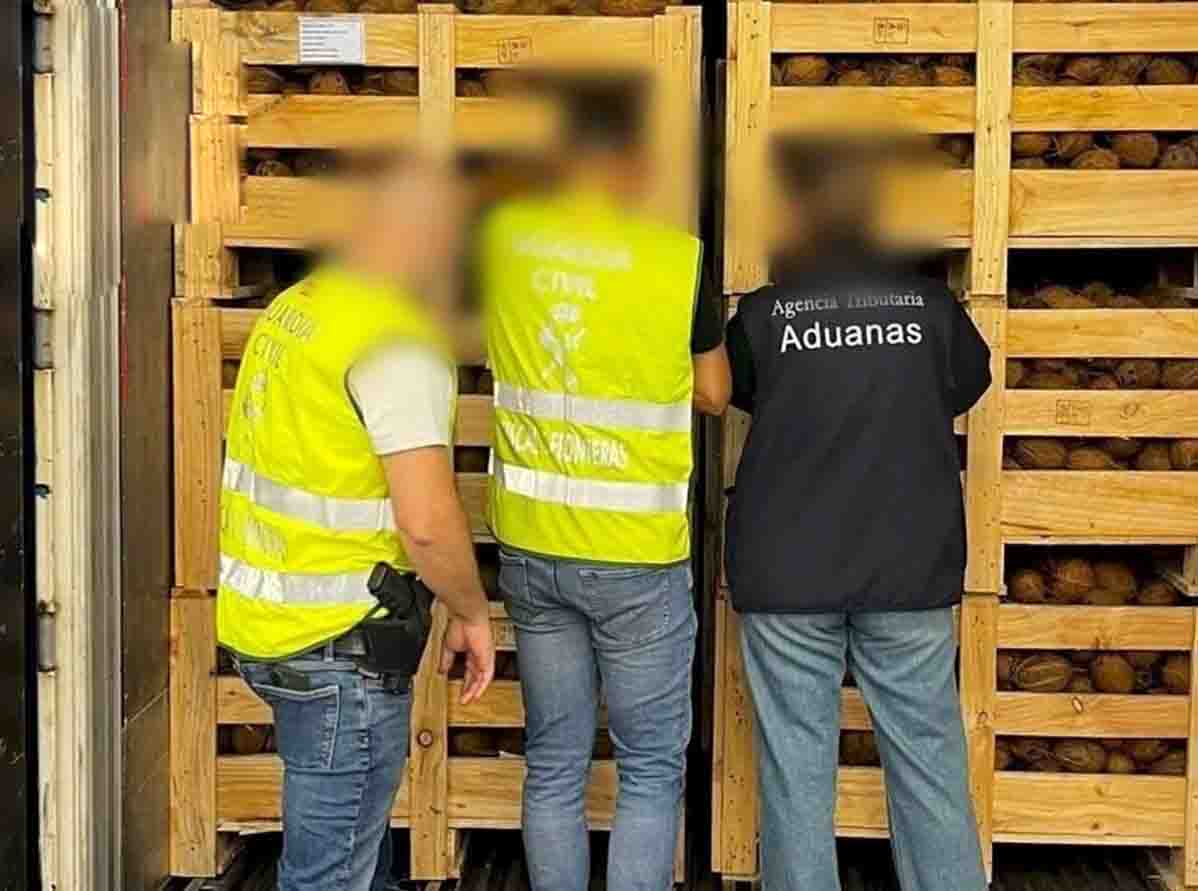
Spanish authorities have seized approximately 2,600 kilogrammes of cocaine concealed in two shipping containers carrying coconuts from Ghana, triggering renewed scrutiny of security at the country's ports and raising questions about the activities of international drug trafficking networks.
The seizure at the Port of Valencia has also led to an investigation in Ghana, where the Narcotics Control Commission (NACOC) has arrested a 43-year-old freight forwarder operating in Tema in connection with the shipment.
According to Spain's Tax Agency and Civil Guard, the cocaine was discovered beneath false bottoms fitted into wooden crates used to transport the declared coconut cargo.
The Spanish authorities announced details of the operation on Wednesday, November 11, 2026, revealing that two men had also been arrested in Spain over their alleged involvement in importing and unloading the consignment.
How Spanish Authorities Discovered the Cocaine
The two shipping containers were loaded at the Port of Tema on August 2, 2026, and arrived at the Port of Valencia on August 22.
Spanish customs officials selected the containers for inspection after identifying them as presenting a high-risk profile during routine monitoring of international cargo.
A physical examination uncovered specially constructed false bottoms in the wooden boxes carrying the coconuts. Beneath these compartments, officers discovered layers of packages containing cocaine hydrochloride.
Authorities subsequently removed the drugs but continued monitoring the consignment to identify the individuals expecting to receive it.
The remaining cargo was transferred into two refrigerated trucks, which were followed to a warehouse at the La Juaida industrial estate in Viator, in Spain's Almería province.
Officers monitored the unloading operation before arresting two men identified as the suspected importer of the shipment and the individual responsible for supervising its unloading.
The investigation involved Spain's Tax Agency Customs Surveillance Service and the Civil Guard.
NACOC Arrests Tema Freight Forwarder
The seizure has triggered an investigation in Ghana, with NACOC arresting a 43-year-old freight forwarder at Community 1 in Tema on Wednesday, November 11.
A report by JoyNews said preliminary investigations had linked the suspect to the preparation and processing of customs documentation for the intercepted shipment.
According to the report, an agent allegedly brought the consignment to the freight forwarding company and supplied the information required to prepare the export documents on behalf of the exporters.
The suspect is being held by NACOC to assist with investigations as authorities work to establish the full circumstances surrounding the shipment and identify other individuals who may have been involved.
The arrest represents an important development in efforts to investigate the Ghanaian end of the operation.
However, being arrested in connection with an investigation does not establish guilt, and the suspect's alleged role has yet to be determined through the legal process.
Ntim Fordjour Questions Ghana's Port Security
The latest seizure has prompted criticism from Assin South MP and Ranking Member of Parliament's Defence and Interior Committee, Rev. John Ntim Fordjour.
In comments following the interception, the lawmaker questioned the effectiveness of Ghana's port security arrangements and expressed concern about repeated international drug seizures involving consignments linked to the country.
He alleged that more than US$3 billion worth of narcotics linked to Ghana had been intercepted abroad during President John Dramani Mahama's administration.
Ntim Fordjour also questioned the government's handling of port operations and called for decisive action to prevent international trafficking networks from exploiting Ghana's shipping infrastructure.
His financial estimate and allegations about the involvement of state officials have not been independently established and should be treated as claims made by the lawmaker.
Bright Simons Raises Questions About Intelligence Sharing
Governance and policy analyst Bright Simons has also drawn attention to the importance of intelligence coordination among Ghanaian institutions responsible for monitoring international cargo and combating drug trafficking.
The latest interception has renewed questions about whether relevant agencies are sharing sufficient intelligence and effectively coordinating their operations to identify suspicious consignments before they leave the country.
The case also highlights the importance of cooperation between Ghanaian authorities, foreign customs agencies, shipping companies and international law enforcement organisations.
While Spanish authorities successfully identified the containers as high-risk and uncovered the cocaine, the investigation must establish how the shipment was prepared, who organised it and whether any weaknesses in Ghana's export monitoring procedures were exploited.
Another Setback for Ghana's Fight Against Drug Trafficking
The Valencia seizure adds to a series of major international drug interceptions involving shipments originating from or passing through Ghana.
In September 2026, French customs officials seized nearly 3.9 tonnes of cocaine concealed in a container carrying plastic waste from Ghana at the Port of Dunkirk.
That case prompted investigations by Ghana's Narcotics Control Commission and renewed concerns about the security of export containers moving through the country's ports.
Other major interceptions have also involved consignments from Tema, including a 4.5-tonne cocaine seizure in the Netherlands in 2025 and a 2,829-kilogramme seizure involving cassava flour in Belgium.
These incidents have increased pressure on Ghanaian authorities to demonstrate that cargo screening, intelligence gathering and border surveillance systems are capable of detecting sophisticated trafficking operations.
Investigation Must Establish the Full Network
Although the latest arrest in Tema is a significant development, investigators still face the task of identifying the individuals responsible for organising the cocaine shipment and determining how the drugs entered the supply chain.
Authorities will also need to establish whether the false compartments were constructed before the cargo arrived at Tema, whether the shipment was compromised during its handling, and whether additional individuals or businesses facilitated the operation.
For Ghana, the issue extends beyond the seizure of a single consignment. Repeated international interceptions involving Ghana-linked shipments raise serious questions about the country's export controls, port security and reputation in international trade.
The ongoing investigations in Spain and Ghana will be critical in determining the full extent of the trafficking network and whether further arrests will follow.




Comments (0)
No comments yet.
Only registered readers can comment.
Sign in or create a free account to join the discussion.