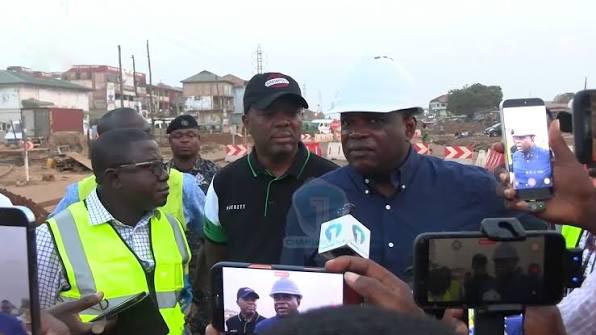
Ghana's Minister for Roads and Highways, Governs Kwame Agbodza, has undertaken an early-morning inspection of the Ashaiman Roundabout–Atimpoku Junction road project as government intensifies efforts to accelerate infrastructure development ahead of the Christmas season.
The inspection formed part of the Minister's tour of road projects in the Eastern Region, during which he assessed construction progress and identified obstacles that could delay the completion of ongoing works.
One of the major concerns raised during the visit was a billboard situated at the Ashaiman Roundabout, which the Minister said was obstructing construction activities, particularly preparations for a planned flyover at the interchange.
Agbodza Gives Billboard Owners One Week to Remove Structure
During the inspection, Mr Agbodza issued a seven-day ultimatum to the owners of the billboard to dismantle and remove the structure.
He explained that the billboard occupies part of the right-of-way of the 64.4-kilometre Ashaiman Roundabout–Atimpoku Junction road project, making it difficult for contractors to proceed with the planned construction works.
The Minister warned that if the owners failed to comply within one week, the Ministry would take steps to remove the structure to prevent further obstruction.
He also cautioned property owners and members of the public against encroaching on land designated for road construction, stressing the importance of allowing contractors to work without unnecessary interference.
The inspection is part of the government's efforts to monitor infrastructure projects and ensure that construction activities progress according to schedule.
Madina Traders Push Back Against Decongestion Exercise
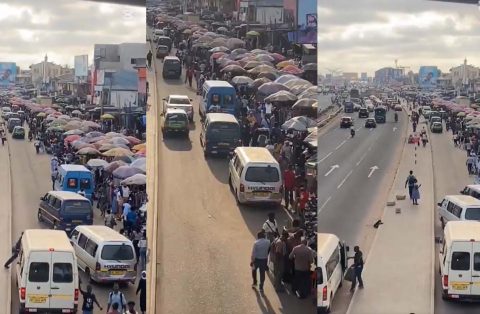
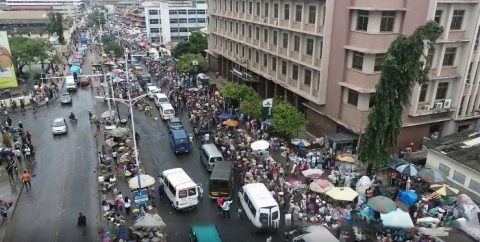
While government authorities are working to improve road infrastructure and traffic management, the ongoing decongestion exercise in parts of Greater Accra has generated resistance from some street traders.
In Madina and other busy commercial areas, some traders have expressed dissatisfaction with efforts to remove them from roadsides and unauthorised trading locations.
Some affected traders argue that the exercise threatens their livelihoods, particularly as the Christmas season approaches, when commercial activities traditionally increase.
Others have openly criticised the government's approach, with some warning that their experiences could influence their political support for President John Dramani Mahama.
Some traders have also vowed to return to their previous trading locations despite losing income and facing enforcement measures.
The concerns reflect the difficult economic circumstances facing informal traders who depend on daily sales to support themselves and their families.
Public Divided Over Roadside Trading and City Decongestion
The decongestion exercise has generated different reactions among residents, commuters and other members of the public.
Some have supported the government's enforcement efforts, arguing that traders occupying pavements, bus stops and road shoulders contribute to traffic congestion and expose pedestrians to danger.
They maintain that pedestrians should be able to use designated walkways without being forced onto busy roads, while commercial vehicles should have unobstructed access to bus stops.
Others, however, believe that clearing traders without providing accessible and affordable alternative markets could worsen unemployment and economic hardship among informal workers.
They have called on metropolitan and municipal authorities to prioritise the development of proper market facilities and engage affected traders before carrying out enforcement exercises.
Balancing Infrastructure Development With Livelihoods
The developments highlight the broader challenge facing urban authorities as they seek to improve road infrastructure, manage traffic congestion and restore order in public spaces while protecting the livelihoods of informal sector workers.
For the government, removing obstructions from road corridors and ensuring that public spaces serve their intended purposes are important steps towards improving road safety and urban development.
However, the concerns raised by traders suggest that sustainable decongestion will require more than enforcement alone.
Providing suitable trading locations, engaging affected businesses and ensuring that displaced traders have practical alternatives could help prevent the repeated return of roadside trading.
As road construction continues along the Ashaiman–Atimpoku corridor and decongestion measures intensify across Greater Accra, attention will remain on how authorities balance infrastructure development, public safety and the economic interests of affected traders.



Comments (0)
No comments yet.
Only registered readers can comment.
Sign in or create a free account to join the discussion.