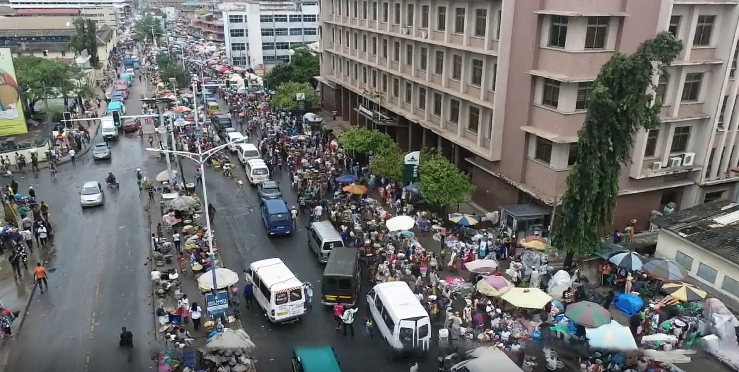
ACCRA, Ghana — The Accra Metropolitan Assembly (AMA) is facing growing resistance from informal traders following its 48-hour directive ordering hawkers and traders occupying unauthorised bus stops across the capital to vacate the areas.
The directive, issued on Wednesday, November 4, 2026, forms part of the Assembly’s renewed efforts to clear public spaces, ease traffic congestion and improve safety for commuters and road users.
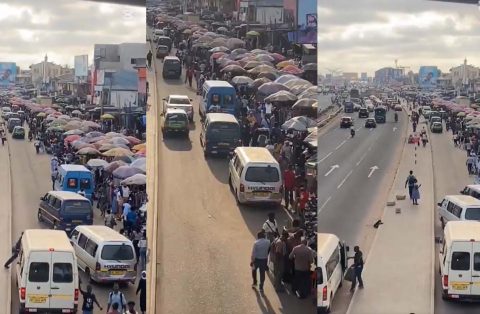
The AMA said the decision followed complaints from commercial drivers about traders occupying designated bus stops, making it difficult for vehicles to pick up and drop off passengers.
According to the Assembly, the activities also obstruct pedestrian movement and force commuters to board and alight from vehicles at unsafe locations, increasing the risk of road accidents.
Enforcement Begins at Major Accra Locations
The Assembly has indicated that enforcement measures have already started at some affected locations, including the Kwame Nkrumah Interchange, Achimota and sections of the Central Business District.
Accra Mayor Michael Kpakpo Allotey is leading the exercise, which the AMA says is intended to restore order and ensure that bus stops and other public spaces are used for their designated purposes.
The Assembly has warned that traders who ignore the directive could face enforcement action under its by-laws. It has also cautioned those who return to cleared locations that they could face further sanctions, including prosecution.
Informal Traders Challenge the Deadline
The 48-hour ultimatum has, however, attracted criticism from the Union of Informal Workers Associations (UNIWA), which says the directive was issued without sufficient consultation with affected traders.
In a statement reported by the Ghana News Agency on November 5, the union rejected the ultimatum and called on the AMA to suspend the deadline and engage traders before proceeding with the exercise.
UNIWA acknowledged the concerns surrounding traffic congestion and public safety but argued that an immediate removal exercise without adequate engagement or alternative trading arrangements could threaten the livelihoods of thousands of informal workers.
The union also said the directive came shortly after discussions involving organised labour and relevant authorities on trading spaces and the management of public areas.
UNIWA warned that traders could organise a demonstration if the planned enforcement continued without proper consultation.
Transport Operators Also Demand Action
The dispute comes amid growing tension between traders and commercial transport operators over the use of bus stops and road corridors.
Transport unions, including the Ghana Private Road Transport Union (GPRTU) and the Ghana Road Transport Coordinating Council (GRTCC), had raised concerns about roadside trading and threatened industrial action over the situation.
The unions subsequently suspended their planned strike after discussions with government representatives, but reportedly gave authorities 30 days to address their concerns.
The development has increased pressure on city authorities to find a lasting solution to the recurring problem of roadside trading and blocked transport facilities.
The Challenge of Balancing Order and Livelihoods
While clearing unauthorised trading spaces could improve traffic flow and pedestrian safety, the exercise also raises questions about the availability of suitable places for affected traders to continue their businesses.
For many informal traders, roadside selling provides an important source of income to support their families. Removing them without practical alternatives could create further economic difficulties.
At the same time, drivers and commuters need accessible bus stops, clear pedestrian routes and safer conditions on busy roads.
The AMA's enforcement exercise therefore faces the challenge of addressing congestion and public safety while considering the economic realities of the people whose livelihoods depend on informal trading.
As the deadline and enforcement measures draw attention across the capital, the response from the Assembly and its engagement with traders' representatives will be important in determining whether the exercise produces a lasting solution or another temporary clearance followed by the return of roadside trading.



Comments (0)
No comments yet.
Only registered readers can comment.
Sign in or create a free account to join the discussion.