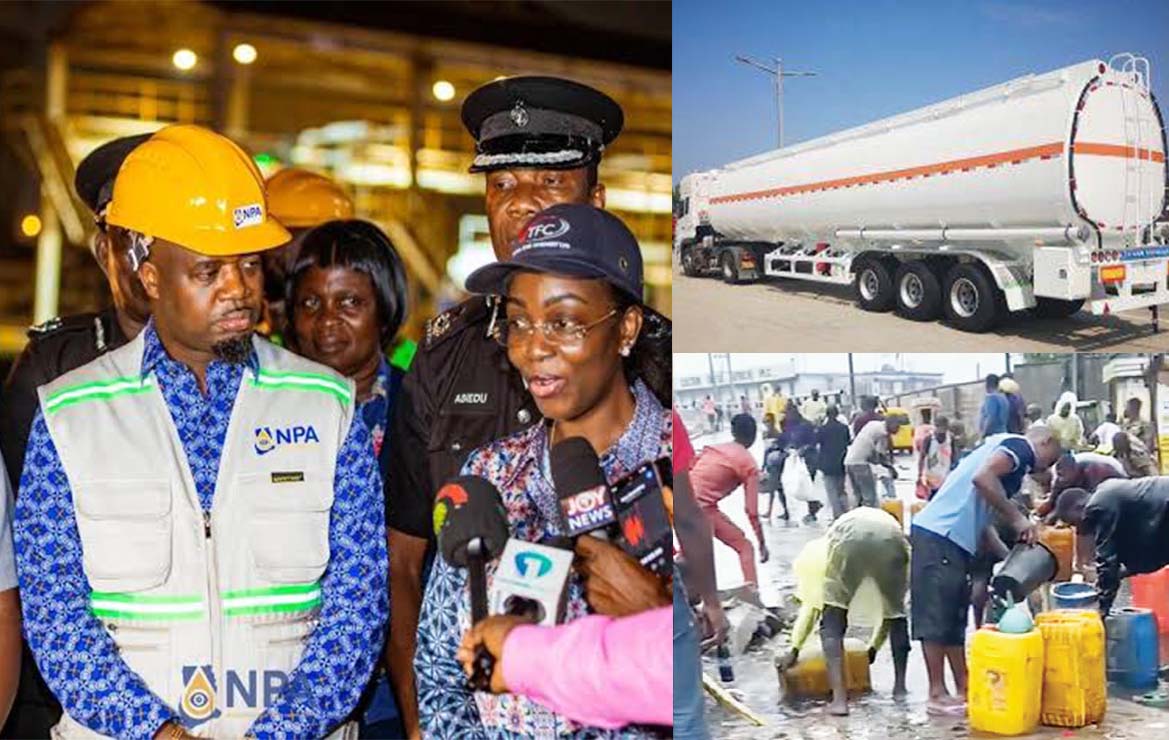
The Chief Executive of the National Petroleum Authority (NPA), Godwin Kudzo Tameklo, has appealed to Ghanaians to stop relatives and friends from collecting petroleum products from overturned fuel tankers, warning that the practice puts lives at serious risk.
Speaking on the issue, Mr. Tameklo said the temptation to salvage fuel from accident scenes often overrides caution, with potentially devastating consequences. He explained that spilled petroleum products are highly flammable, and even a small spark from a phone, a vehicle engine, or static electricity can trigger a deadly explosion.
“Human life is far more valuable than any quantity of fuel,” the NPA boss stressed, urging citizens to treat every fuel tanker accident as a danger zone and keep a safe distance.
He appealed to community members, opinion leaders, and families to take up the responsibility of educating others on the dangers involved. According to him, public awareness is key to preventing a repeat of past tragedies in which scores of people have lost their lives or suffered severe burns while attempting to collect leaked fuel.
Mr. Tameklo advised that when a tanker overturns, the public should immediately move away from the area and alert the appropriate authorities, including the Ghana National Fire Service, the police, and the National Ambulance Service. Bystanders should also avoid smoking, using naked flames, or operating electronic devices near the scene.
The NPA, he noted, continues to work with transport operators, drivers, and other stakeholders to enforce safety standards within the downstream petroleum sector. These include driver training, regular tanker inspections, and adherence to road safety regulations aimed at reducing the number of accidents involving fuel-carrying vehicles.
The CEO also reminded drivers and tanker owners of their duty to ensure their vehicles are roadworthy and operated responsibly.
He concluded with a passionate call for collective vigilance, urging all Ghanaians to prioritise safety over short-term gain. “No fuel is worth a life,” he said, adding that prevention remains the surest way to protect communities from avoidable disasters.



Comments (0)
No comments yet.
Only registered readers can comment.
Sign in or create a free account to join the discussion.