
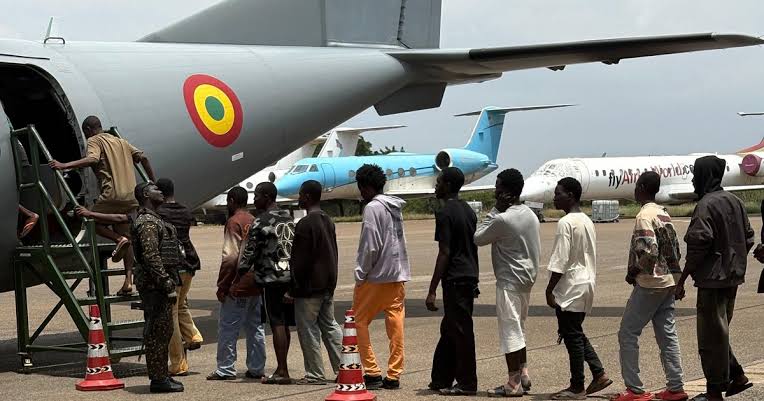
ACCRA — One hundred and twenty Nigerians, allegedly trafficked into Ghana and forced to work for cybercrime gangs, are back home after a multinational security operation broke up the network that held them.
The operation, codenamed Operation Cyberhunt, was led by Ghana's Cyber Security Authority (CSA) working with local security and intelligence agencies and their counterparts in Nigeria, the United Kingdom and the United States, including the FBI.
Minister for Communication, Digital Technology and Innovations Samuel Nartey George announced the repatriation on social media on Tuesday, October 13, 2026. He thanked the Ghana Air Force and the Ministry of Defence for flying the 120 Nigerians home.
"Ghana under President Mahama will remain an unfavourable destination for cyber criminals," the minister declared.
Victims, not just suspects
The most striking detail of the case is how the 120 people are described. The minister said they were arrested during the sting, but also that they had been trafficked to Ghana and forced to work in the cybercrime setups. In other words, many appear to have been victims of the network as much as participants in it.
That pattern has become common in the global fight against online fraud: criminal gangs lure young people across borders, often with promises of legitimate jobs, then confiscate their documents and force them to run scams.
What was seized
Operation Cyberhunt netted a large haul of equipment and evidence:
- 130 laptops
- 136 mobile phones
- Internet connectivity devices and other digital equipment
- Four vehicles, one reportedly stolen from Canada
- 10 Nigerian passports
- Jewellery
The seizure of passports supports the trafficking angle, since holding victims' travel documents is a common way for traffickers to stop them from leaving.
A cross-border crackdown
The operation shows how far cybercrime enforcement now reaches beyond national borders. Agencies in four countries worked together to identify the victims, seize the equipment and pursue those linked to the network. The car reportedly stolen from Canada adds yet another international thread to the case.
Authorities have not disclosed where or when the raids took place, the identities of the people rescued, or the specific scams they were allegedly forced to run.
Eight face prosecution
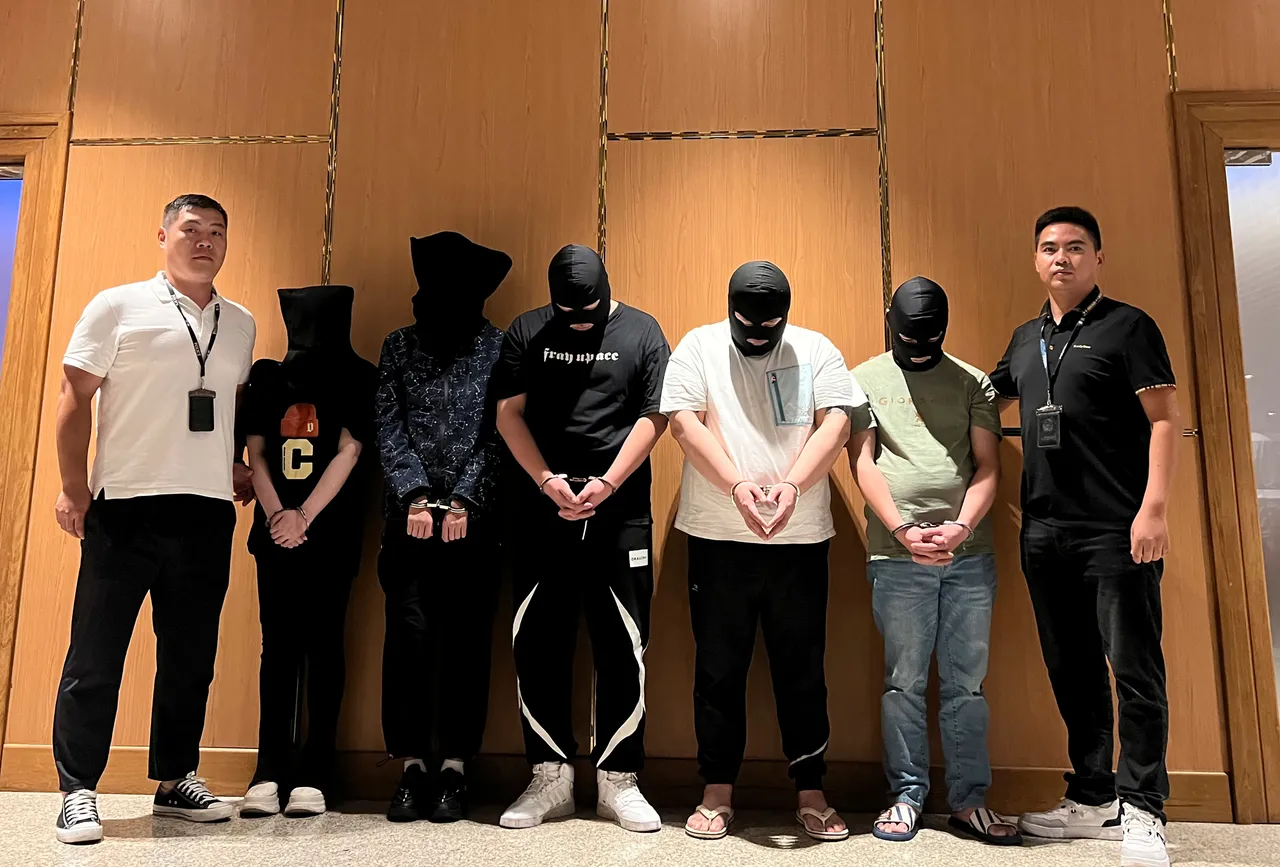
While the 120 Nigerians have been sent home, the investigation is not over. The minister said eight other people are being processed for prosecution in connection with the operation. Their names and the charges they face have not been made public.
Protect yourself from job traps
Cases like this often begin with an attractive job offer. Whether you are in Ghana, Nigeria or elsewhere, watch out for these warning signs:
- an overseas job offer that arrives through social media or a stranger, with no verifiable company
- an employer who asks you to pay for your own visa, travel or "processing"
- anyone who wants to keep your passport or ID "for safekeeping"
- vague job descriptions, such as "online sales" or "customer service", with unusually high pay
If you suspect cybercrime or human trafficking in Ghana, you can report it to the Cyber Security Authority or the Ghana Police Service.








Comments (0)
No comments yet.
Only registered users can comment.
Sign in or create a free account to join the discussion.