
ACCRA — Long before the nominations opened for the 10th Anniversary Edition of the Ghana Energy Awards, its organisers were building bridges with the people who tell the energy sector's story.
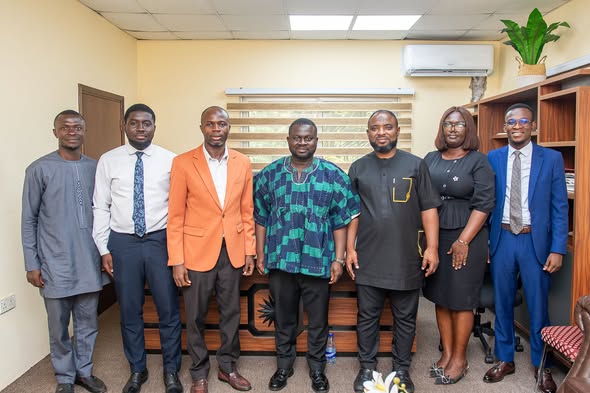
Earlier this year, the Energy Media Group (EMG), organisers of the Awards, paid a courtesy visit to the Ghana Journalists Association (GJA). The visit was part of a wider effort to strengthen stakeholder engagement and deepen collaboration ahead of the landmark anniversary edition.
The meeting brought together the leadership of both institutions to share perspectives on Ghana's changing energy sector and on the media's role in it.
Why journalists matter to energy
Few sectors touch daily life in Ghana as directly as energy. Power outages, fuel prices, electricity tariffs and the country's transition to cleaner energy all shape household budgets and business costs.
That is why the media's role featured strongly in the discussions. Both institutions explored how journalism can:
- promote public accountability by scrutinising the performance of energy institutions and companies
- inform public conversations about complex issues such as tariffs, gas supply, renewable energy and the green transition
- uphold responsible journalism, so that reporting on a technical and sensitive sector is accurate, balanced and fair
A partnership with a track record
The link between the Ghana Energy Awards and the media runs deep. The Awards have long recognised the journalists who cover the sector, with Energy Reporter of the Year among their categories.
For the GJA, Ghana's umbrella body for journalists, closer engagement with industry platforms like the Awards offers a chance to encourage specialised, evidence-based reporting on a sector that affects every Ghanaian.
The road to the 10th edition
The GJA visit formed part of a year-long calendar of stakeholder engagements leading up to the Awards' tenth anniversary.
- February 23, 2026: The Awards Secretariat kicked off anniversary activities with a courtesy call on the Ministry of Energy and Green Transition, led by CEO Henry Teinor and Awarding Panel Chairman Kwame Jantuah. The team presented the Site Visitation Report from the 9th edition and the roadmap for the 10th.
- Through the year: Further stakeholder engagements, policy dialogues and planned outreach to traditional leaders, alongside a planned social responsibility project on school infrastructure in deprived communities.
- September 30, 2026: The 10th edition was launched at the Airport View Hotel in Accra, and nominations opened.
The 10th edition at a glance
- Theme: "Consolidating Ghana's Energy Sector Gains: A Decade of Resilience, A Future of Sustainable Energy"
- Awards: 35 in total, with 30 competitive and five non-competitive categories
- New categories: Energy Icon of the Decade, Private Sector Impact Leadership Award, Digital Transformation in Energy Award and Outstanding Engineer of the Decade
Since the first edition in 2017, the Ghana Energy Awards have recognised excellence and innovation across the country's energy value chain. The scheme is endorsed by the Ministry of Energy and Green Transition and the World Energy Council Ghana, with its process independently validated by Forvis Mazars and Casely Brooke Law Firm.



Comments (0)
No comments yet.
Only registered users can comment.
Sign in or create a free account to join the discussion.