



Hezbollah has confirmed that eight of its members were killed following Israeli airstrikes on eastern Lebanon late Friday, as tensions continue to rise in the region despite an existing ceasefire agreement.
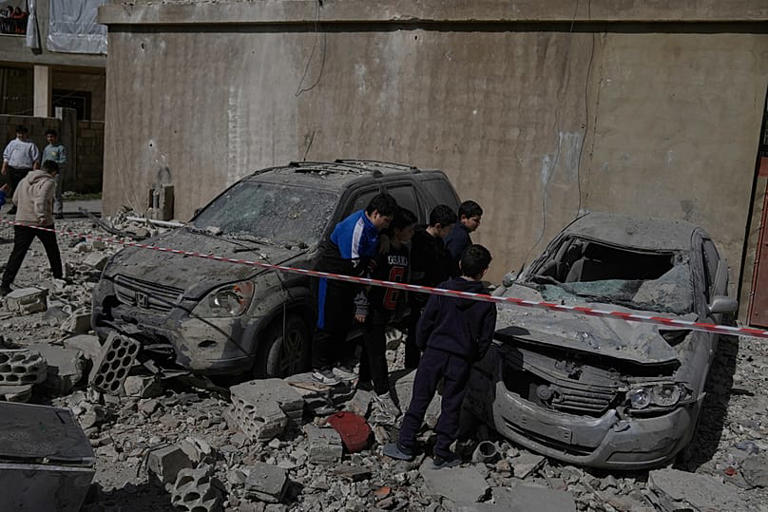
The strikes targeted areas near the northeastern town of Rayak, where a residential building was hit, destroying the top floor of a three-storey structure. According to Hezbollah sources, several of those killed were local commanders operating in the area.
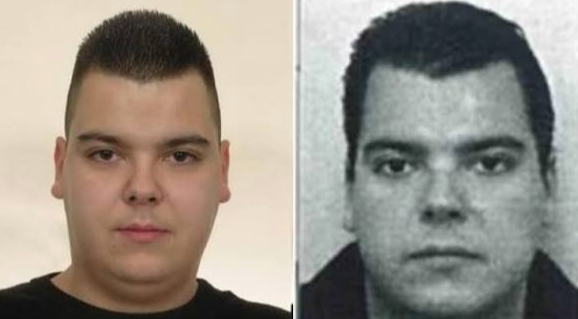
A Hezbollah official, speaking anonymously to the Associated Press, identified three of the deceased commanders as Ali al-Moussawi, Mohammed al-Moussawi and Hussein Yaghi.
The Israeli military later confirmed the operation. In a statement shared on social media, the Israel Defense Forces (IDF) said the strikes targeted “command centres” in the Baalbek region, claiming the individuals killed were involved in operational planning and preparations for attacks against Israel.
The IDF further alleged that the activities of the targeted individuals violated existing security understandings between Israel and Lebanon.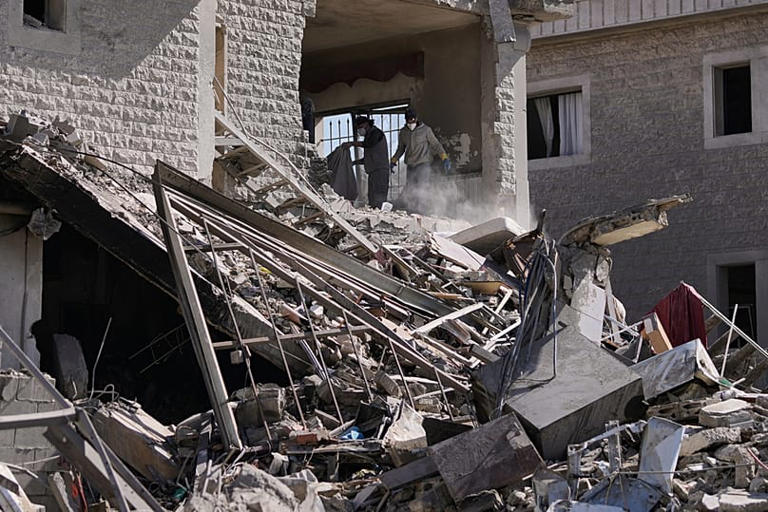
Civilian casualties reported
Lebanon’s Health Ministry reported that at least 10 people were killed in the strikes, including three children, with more than 20 others wounded. Medical staff at Rayak Hospital confirmed receiving multiple bodies and treating injured victims, including foreign nationals.
Hospital officials stated that among the dead were a Syrian man and an Ethiopian woman, while several other wounded individuals were also non-Lebanese nationals.
Regional tensions intensify
The incident comes amid heightened instability across the Middle East, with growing fears of a wider regional escalation. The United States has warned of possible military action against Iran if negotiations over Tehran’s nuclear programme collapse — a development with serious implications for Iranian-aligned groups in the region.
Hezbollah, which maintains close ties with Iran, has been engaged in repeated hostilities with Israel since the outbreak of the Gaza war.
The group began launching attacks after Israel started its military campaign in Gaza following the Hamas-led assault on southern Israel on October 7, 2023. Israel responded with sustained airstrikes and shelling across southern Lebanon.
Ceasefire under strain
Although a ceasefire agreement brokered in November 2024 by former US President Joe Biden significantly reduced large-scale hostilities, attacks have continued intermittently.
The conflict escalated into full-scale war in September 2024, before diplomatic efforts produced the current truce. However, both sides have accused each other of violating the agreement.
Israel maintains that its operations are aimed at preventing Hezbollah’s rearmament and rebuilding of military infrastructure, while Lebanese authorities say civilian casualties continue to rise as a result of ongoing strikes.
Political and symbolic impact
One of those killed, Hussein Yaghi, was the son of Mohammed Yaghi, a senior Hezbollah figure and founding member who died in 2023. Mohammed Yaghi was also a close aide to the late Hezbollah leader Hassan Nasrallah, who was killed in an Israeli airstrike in September 2024 — a blow that reshaped the group’s leadership structure.
Fragile stability
Despite diplomatic efforts, the situation remains volatile. Daily airstrikes, accusations of ceasefire violations, and regional power rivalries continue to undermine stability in both Lebanon and Israel.
Analysts warn that without renewed diplomatic engagement and stronger international mediation, the fragile truce could collapse, pushing the region back toward large-scale conflict.



Comments (0)
No comments yet.
Only registered users can comment.
Sign in or create a free account to join the discussion.