






ADDIS ABABA — Abiy Ahmed has called on African nations to place water at the centre of their development agendas, describing it as a strategic pillar for economic transformation, innovation, and long-term stability across the continent.
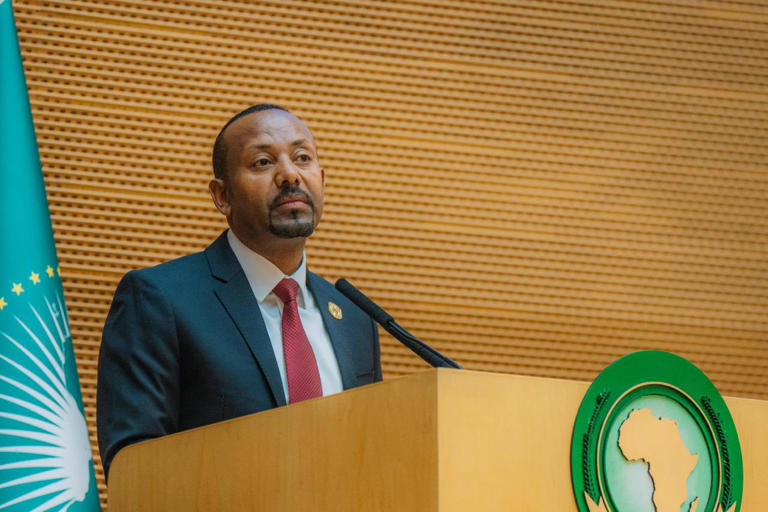
Speaking at the 39th Ordinary Session of the Assembly of the African Union in Addis Ababa, the Ethiopian leader urged heads of state to rethink how Africa values and manages its natural resources.
“Africa’s strength lies not only in what it extracts, but in what it designs, builds and governs,” he told delegates at the AU headquarters.
Water as a foundation for development
Prime Minister Abiy stressed that water should be treated not as a finite commodity, but as a driver of structural transformation across sectors.
“Water is more than a resource. It is a foundation of development, innovation and stability. It shapes our cities, our farms, our health and our peace,” he said.
He highlighted the role of integrated water management in supporting urbanisation, improving food security, expanding renewable energy, and strengthening public health systems. According to him, coordinated water policies can accelerate industrialisation while reducing vulnerability to climate-related shocks.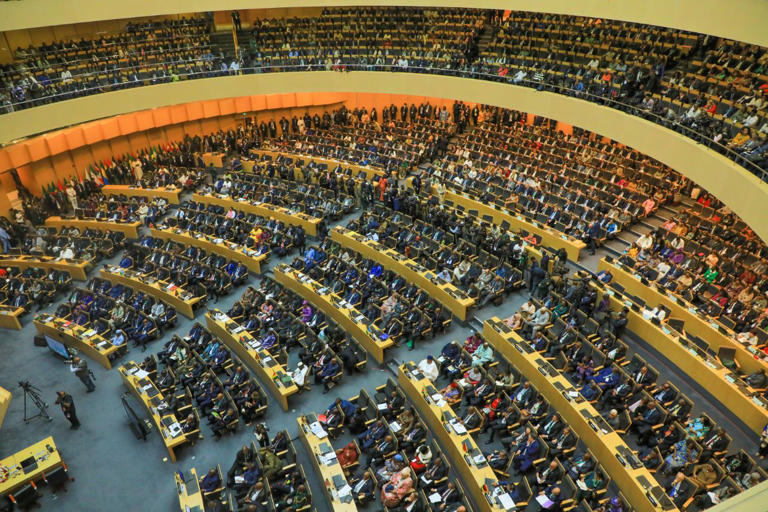
GERD cited as example of African ambition
Drawing on Ethiopia’s experience, the prime minister pointed to the Grand Ethiopian Renaissance Dam as a symbol of home-grown engineering and continental ambition.
“The Grand Ethiopian Renaissance Dam now powers homes and industry, exports electricity to neighbouring countries, and shows how African ingenuity can drive shared prosperity across Africa,” he said.
He noted that such large-scale infrastructure projects can expand energy access, promote regional integration, and generate shared economic benefits when built on cooperation and trust.
Call for cooperation on shared rivers
Abiy also urged African countries to manage transboundary rivers through dialogue and partnership rather than rivalry. He said cooperative governance of shared water basins could turn potential conflicts into opportunities for integration.
“Rivers, when governed cooperatively, can become engines of stability rather than sources of tension,” he stated.
The prime minister called on member states to strengthen coordination under the African Water Vision 2025 framework, which aims to ensure equitable and sustainable water use across the continent.
He further encouraged leaders to invest in water infrastructure, climate-resilient systems, and scientific research to unlock the full potential of the sector. Such investments, he said, are essential for advancing food security, the energy transition, and industrial growth.
Abiy’s remarks come at a time when many African nations are grappling with climate pressures, rapid population growth, and rising demand for energy and agricultural productivity. He argued that placing water at the heart of policy planning would help secure both stability and prosperity for future generations.
Also read this







Comments (0)
No comments yet.
Only registered users can comment.
Sign in or create a free account to join the discussion.