



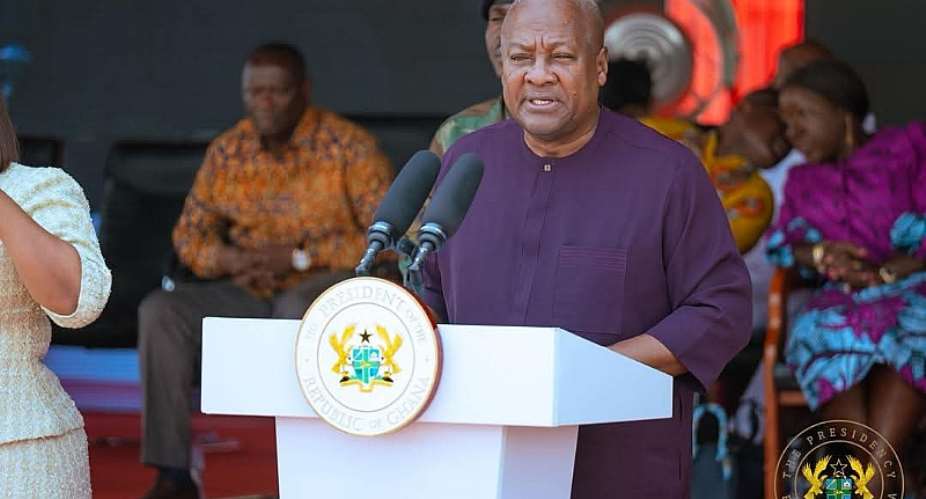
President John Dramani Mahama has announced that Ghana’s new policy banning the export of non-ferrous scrap is projected to increase processed metal exports by $250–300 million every year, while creating between 5,000 and 10,000 new jobs nationwide.
The policy, he said, will also strengthen government revenue through VAT, corporate taxes, and PAYE, as local processing and manufacturing expand.
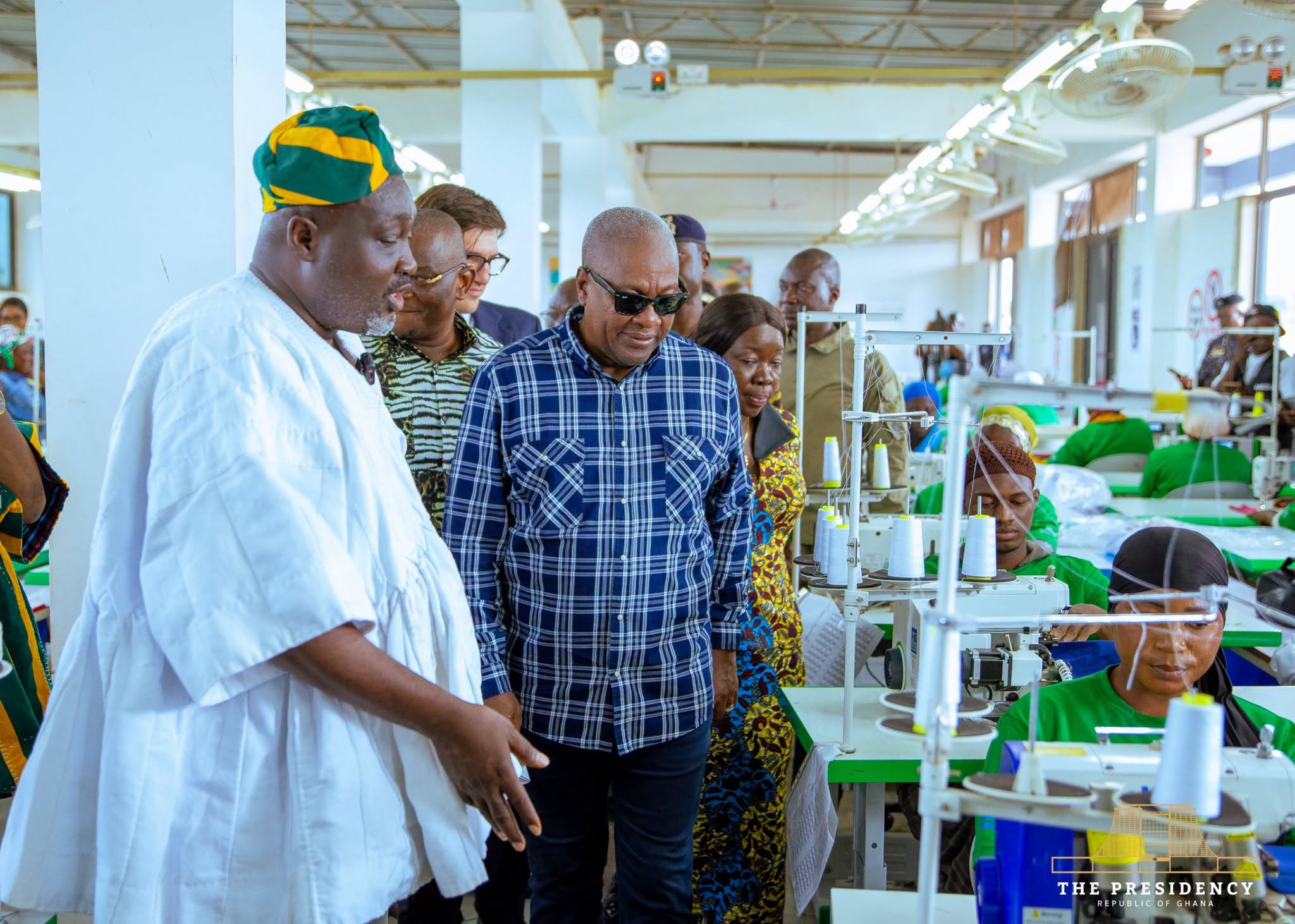
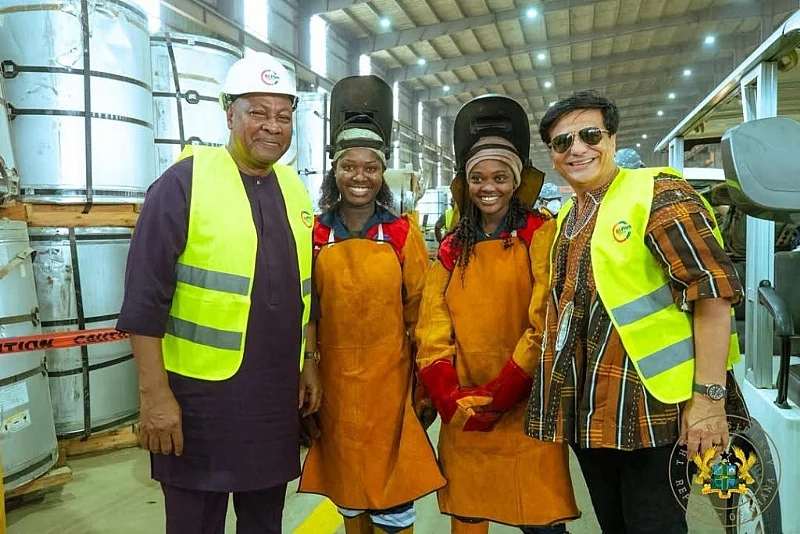
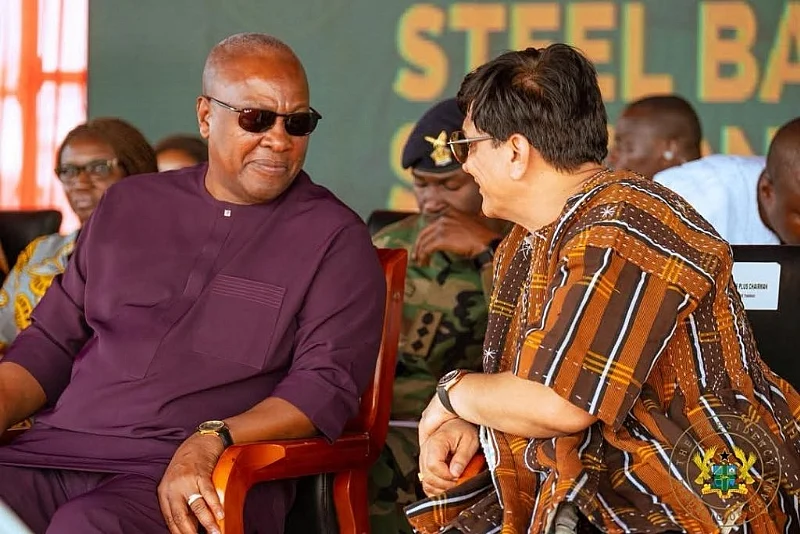
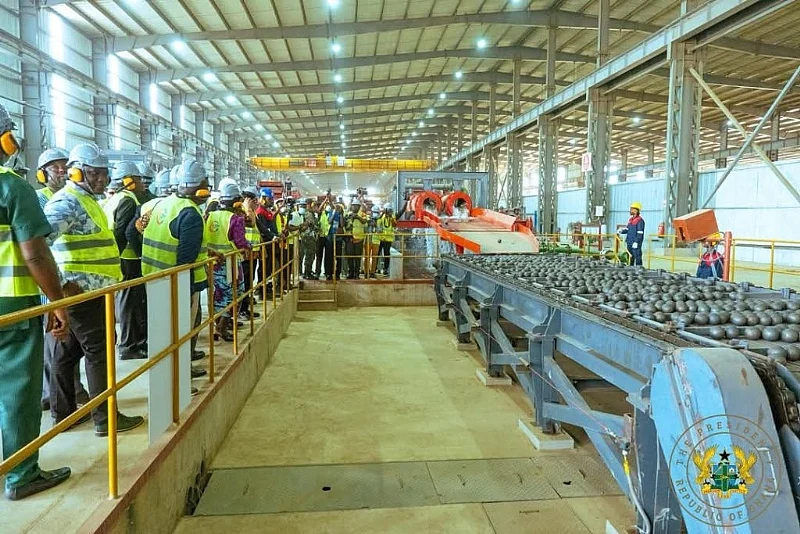
President Mahama made the remarks during the commissioning of the Phase Two Extension of B5 Plus Limited at Lakpleku in the Ningo-Prampram Municipality of the Greater Accra Region. The newly inaugurated facilities include a Steel Ball Plant, Section Mill, and PEP Extension Manufacturing Plants.
He explained that Ghana generates large volumes of scrap metal annually through construction, demolition, vehicle imports, and industrial activity, but for years much of it had been exported in raw form.
“By restricting the export of non-ferrous scrap, we are ensuring that local processors have priority access to raw materials for domestic production,” the President stated.
Strengthening Ghana’s industrial value chain
President Mahama praised the B5 Plus Group as one of the top contributors to national revenue, noting that the company has already paid over $300 million in taxes, with projections to exceed $500 million in the near future.
“We are moving up the value chain. We’re exporting finished and semi-finished products, not raw scrap,” he said.
He added that steel products manufactured in Ningo could supply ECOWAS construction markets, Sahelian infrastructure projects, mining operations across West Africa, and cement and mineral processing industries across the sub-region.
According to him, the strategy positions Ghana as a regional manufacturing hub, reducing dependence on steel imports from Asia and Europe and promoting regional value-chain integration.
Infrastructure as an industrial strategy
President Mahama linked the policy to the government’s Big Push Infrastructure Programme, which focuses on massive investments in roads, railways, bridges, energy transmission lines, housing, and industrial parks.
He noted that Africa requires over $100 billion annually for infrastructure development and that a strong domestic steel base would allow Ghana to supply both local and regional markets.
“This is how infrastructure becomes an industrial strategy,” he emphasized.
24-Hour Economy and industrial growth
The President also highlighted the relevance of the 24-Hour Economy Programme to energy-intensive industries such as steel manufacturing, confirming that the 24-Hour Authority Bill has now been signed into law.
He revealed that GH¢110 million has been allocated in the 2026 Budget to operationalize the programme.
“When factories run three shifts instead of one, employment rises, productivity increases, and exports expand,” he said.
He further outlined government reforms, including:
-
Abolition of the COVID-19 Health Recovery Levy
-
Reduction of the effective VAT rate from 21.9% to 20%
-
Introduction of digital VAT monitoring systems
-
Ongoing review of income tax, customs, and excise regimes
Corporate social responsibility
Founder and CEO of B5 Plus Group, Mukesh Thakwani, announced that the company will construct a Police Station and a Basic School for the Lakpleku community as part of its corporate social responsibility.
He appealed to Samuel Nartey George, MP for Ningo-Prampram, to support the initiative with land for the projects.

Comments (0)
No comments yet.
Only registered users can comment.
Sign in or create a free account to join the discussion.