




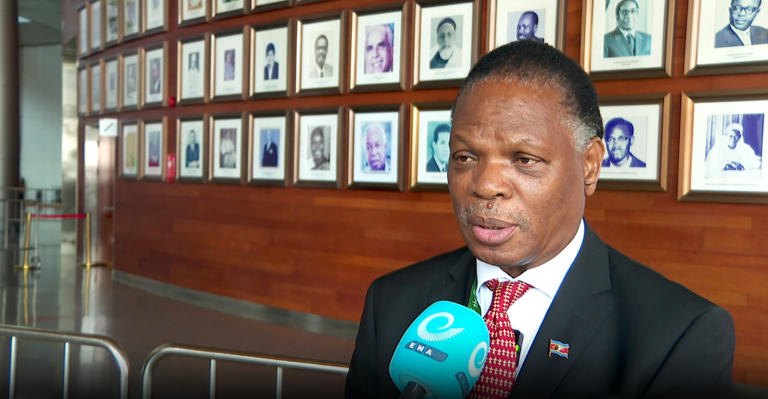
Addis Ababa, February 20, 2026 — The Kingdom of Eswatini has praised Ethiopia for its remarkable achievements in delivering large-scale development projects, describing the country as a leading example of African self-driven progress and infrastructure transformation.
Speaking in an exclusive interview with ENA, Eswatini’s Minister of Natural Resources and Energy, Prince Lonkhokhela Dlamini, commended Ethiopia’s ability to successfully execute massive national projects using internal capacity, with the Grand Ethiopian Renaissance Dam (GERD) singled out as a defining symbol of national determination and technical excellence.
He described Ethiopia’s development momentum as “impressive and exemplary,” noting that the GERD reflects what strong leadership, national unity, and strategic coordination can achieve when aligned toward long-term development goals.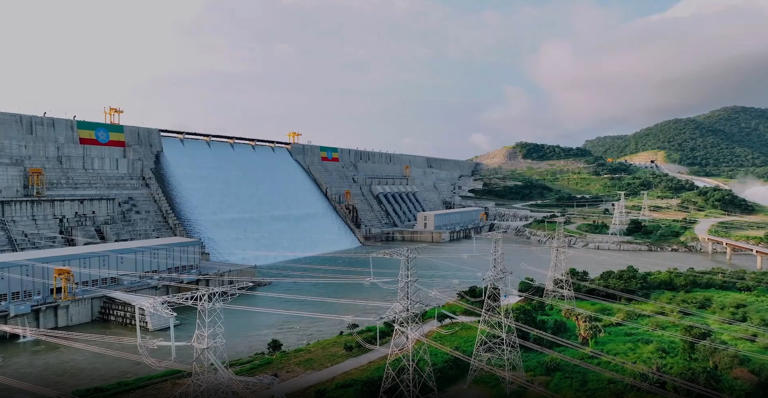
According to Prince Dlamini, the dam represents more than just a national infrastructure project for Ethiopia, but a continental model for African countries seeking independence in energy production and infrastructure financing.
“The GERD is not only for Ethiopia. It stands as a shared resource for the region and a blueprint for African self-reliance in development,” he stated.
He added that power generated from the dam has the potential to strengthen regional cooperation through cross-border energy sharing, supporting economic integration across Africa.
The minister also reflected on Ethiopia’s visible transformation, noting significant improvements in infrastructure, transport networks, water systems, and urban development since his last visit eight years ago.
“The progress is clear and measurable. It reflects effective leadership and a strong development vision that other African countries can learn from,” he said.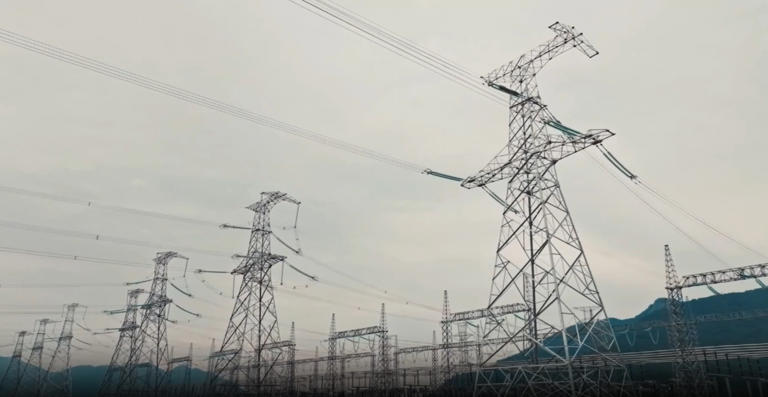
Prince Dlamini further praised Ethiopia’s leadership in renewable energy, water sustainability, and environmental protection, highlighting the country’s investments in clean power generation and large-scale afforestation as evidence of a forward-looking development strategy.
He concluded by expressing Eswatini’s interest in strengthening bilateral cooperation with Ethiopia, particularly in the energy sector, infrastructure development, and sustainable growth initiatives, emphasizing the importance of African partnerships built on shared ambition and mutual benefit.




Comments (0)
No comments yet.
Only registered users can comment.
Sign in or create a free account to join the discussion.