






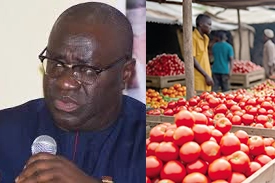
Security analyst Kwesi Aning has ignited a national debate over Ghana’s food security following renewed instability in Burkina Faso and its implications for Ghana’s agricultural supply chain.
Reacting to the growing insecurity in Burkina Faso, Prof. Aning posed a blunt and provocative question:
“Don’t you think that there’s a failure when in a fertile country like Ghana, we travel to a desert to go and buy tomatoes?”
Burkina Faso attacks and regional tensions
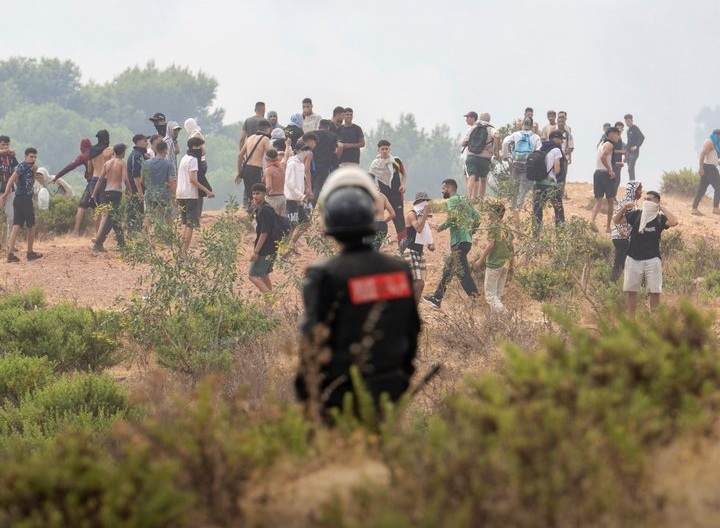
Burkina Faso has in recent years faced persistent militant attacks and political instability, creating serious security concerns across the West African sub-region. Despite this, the country remains a major source of tomatoes for Ghanaian markets, particularly during certain farming seasons.
With insecurity increasingly disrupting transport routes and cross-border trade, concerns are growing over Ghana’s heavy dependence on imported tomatoes from its northern neighbour.
A fertile nation, yet importing
Ghana is widely recognised as one of West Africa’s most agriculturally fertile countries, with vast arable land and favourable rainfall patterns. Yet, traders routinely travel to Burkina Faso to buy tomatoes in bulk for resale in markets across Ghana.
Prof. Aning’s comments have drawn attention to what many analysts describe as deep structural challenges within Ghana’s agricultural system — including weak irrigation infrastructure, limited storage facilities, poor post-harvest management, and seasonal production gaps.
Despite multiple government initiatives aimed at boosting local food production, post-harvest losses and supply inconsistencies continue to push traders across the border for basic food commodities.
When national security meets food security
Beyond economics, the issue also raises serious national security questions. Reliance on a country experiencing frequent attacks exposes Ghana’s food supply chain to risks that could affect prices, availability, and market stability.
Security and development experts argue that food security must now be treated as a strategic national priority, especially in a region increasingly affected by instability and conflict.
Public reactions and debate
Prof. Aning’s remarks have sparked intense public discussion. Many Ghanaians agree that the country must urgently invest in:
-
Irrigation systems
-
Storage and cold-chain facilities
-
Farmer support and financing
-
Modern supply chain management
-
Agro-processing and preservation
Others argue that cross-border trade within ECOWAS is a normal economic activity and not necessarily a sign of national failure.
However, the central question continues to dominate the debate:
Should a country with Ghana’s agricultural potential depend so heavily on imports of basic produce like tomatoes?
As insecurity persists in Burkina Faso, the conversation is shifting from politics to productivity — and whether Ghana is doing enough to secure its own food future.






Comments (0)
No comments yet.
Only registered users can comment.
Sign in or create a free account to join the discussion.