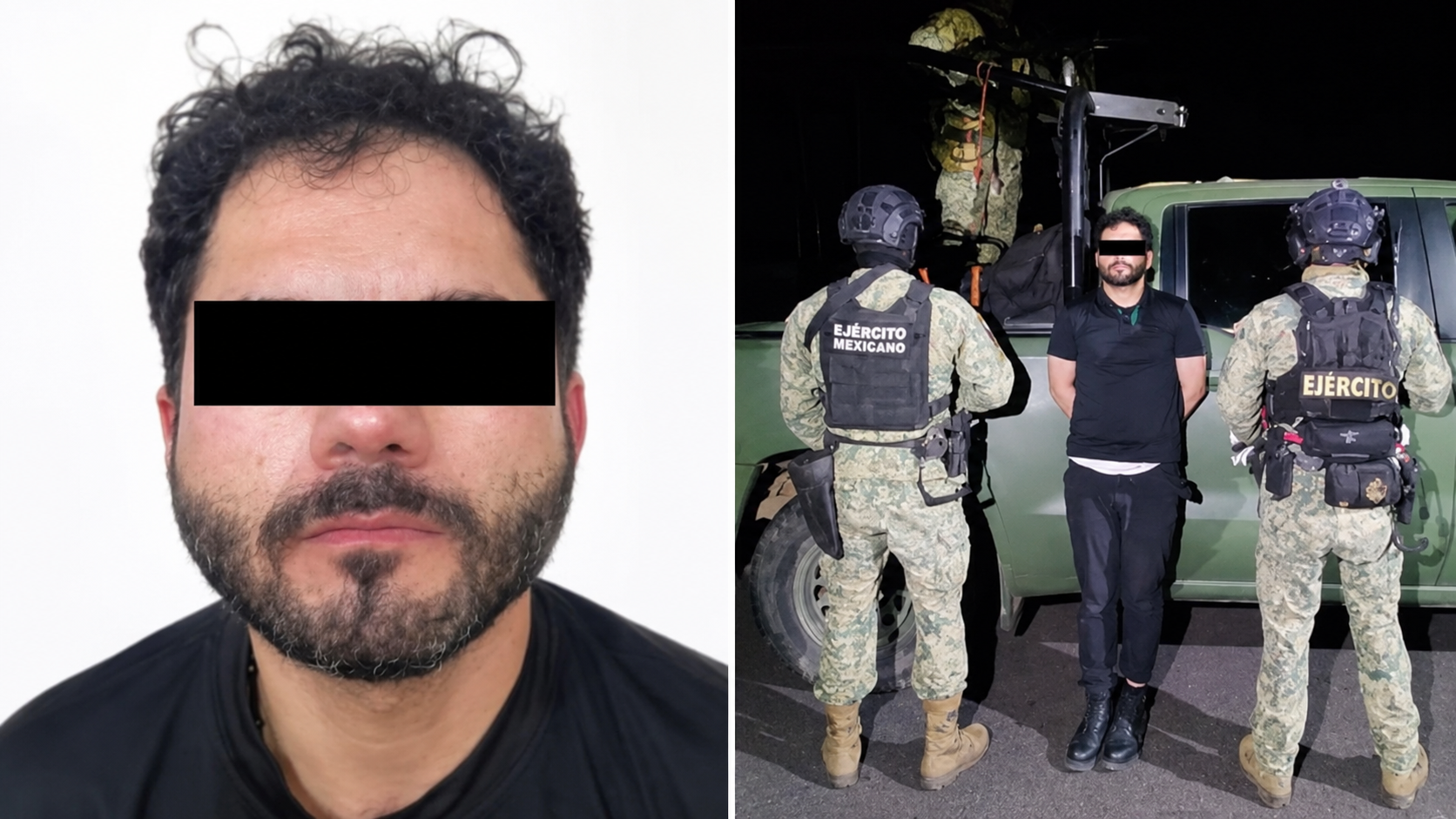
Mexican special forces have captured notorious drug trafficking suspect Fausto Isidro Meza-Flores, popularly known as “El Chapo Isidro”, in a major military operation in the northern state of Sinaloa, triggering violent clashes that left at least 11 people dead.
Meza-Flores, who was among the FBI’s Ten Most Wanted Fugitives, was arrested on Friday night, November 20, 2026, during a coordinated operation in Guasave involving Mexican military personnel and intelligence support from the United States.
The capture represents a significant development in the fight against organised drug trafficking in Mexico, particularly in Sinaloa, where rival criminal factions have been involved in a prolonged struggle for territorial control.
Mexican authorities also arrested two alleged senior members of his criminal organisation: his second-in-command, identified as Germán N., also known as “Serafín”, and a financial operator identified as José N.
How Mexican special forces captured ‘Chapo Isidro’
According to Mexico's Secretariat of National Defense, elite military personnel conducted a carefully planned operation after identifying the location of the wanted cartel leader.
The forces reportedly approached the target area using multiple routes, relying on stealth and surprise before establishing security perimeters around the property to prevent the suspects from escaping.
However, the operation quickly turned violent when the military personnel came under attack from individuals using firearms and explosives.
The soldiers responded to the attack, eventually gaining access to the property and arresting Meza-Flores and the other suspects.
Mexican authorities reported that seven suspected cartel gunmen were killed during the confrontation. Eight suspected criminals were arrested in total, including Meza-Flores and the two senior figures transferred to Mexico City.
The military also recovered firearms, ammunition, a grenade launcher, cash and suspected narcotics.
US intelligence helped secure the arrest
The operation involved intelligence cooperation between Mexican and American security agencies.
US Ambassador to Mexico Ronald Johnson confirmed that strategic intelligence-sharing between the two countries contributed to the successful operation.
US Attorney General Todd Blanche also acknowledged American support, saying the capture followed a coordinated interagency effort involving the US Homeland Security Task Force.
The cooperation reflects continuing security collaboration between Washington and Mexico City as both governments intensify efforts to disrupt major drug trafficking networks.
Meza-Flores had been a priority target for American authorities for years because of his alleged involvement in the international movement of narcotics into the United States.
Who is Fausto Isidro Meza-Flores?
Meza-Flores is accused of leading the Meza-Flores Transnational Criminal Organization, a heavily armed criminal network operating primarily in Sinaloa.
US authorities have linked the organisation to the production, transportation and distribution of several illegal drugs, including fentanyl, cocaine, heroin, methamphetamine and marijuana.
The FBI added him to its Ten Most Wanted Fugitives list in February 2025.
The United States had offered a reward of up to US$5 million for information leading directly to his arrest or conviction.
His criminal history includes federal indictments dating back to 2012, involving alleged drug trafficking conspiracies and firearms offences.
He has also been identified by Mexican authorities as a leading figure in the Beltrán-Leyva criminal organisation, which has maintained connections with other powerful criminal groups operating in the region.
Meza-Flores faces US extradition proceedings and is wanted in Mexico over organised crime and drug-related offences.
Deadly retaliation spreads across Sinaloa
News of the arrest triggered a wave of violence across parts of Sinaloa, particularly around Guasave.
Gunfire erupted in several locations as suspected cartel members responded to the military operation. Vehicles and trucks were set ablaze, businesses were attacked and roads were blocked with burning vehicles.
Residents were forced to seek shelter as armed confrontations spread through parts of the city.
One particularly disturbing incident occurred near a baseball stadium, where spectators and players were caught up in the violence and rushed to safety amid gunfire.
Military helicopters and drones were also deployed as security forces attempted to contain the situation.
Mexico's Defence Ministry confirmed that four regular army infantry soldiers were killed while travelling to reinforce security in the area.
Together with the seven suspected gunmen killed during the operation, the reported death toll reached at least 11.
Cartel leader flown to Mexico City
Following his arrest, Meza-Flores and the two other senior suspects were transported to Mexico City aboard a Mexican Air Force aircraft.
They were subsequently placed in the custody of federal prosecutors specialising in organised crime.
The other five suspects arrested during the operation were transferred to authorities in Sinaloa for further proceedings.
Mexican Security Secretary Omar García Harfuch said security forces would remain deployed across the state to protect residents and prevent further attacks.
He described the arrests as an important step towards restoring peace in Sinaloa.
What happens next?
Although the capture removes a major figure from the criminal organisation, security analysts have warned that arresting cartel leaders does not automatically dismantle the networks they control.
Such operations can create power struggles among surviving commanders and rival factions seeking control of drug trafficking routes, financial resources and territory.
Sinaloa has already experienced significant instability following disputes between competing factions of the wider Sinaloa Cartel.
The Mexican government now faces the challenge of preventing further retaliatory attacks while pursuing the wider criminal networks associated with Meza-Flores.
For the United States, the arrest is also a major development in its efforts to disrupt the supply chains responsible for trafficking dangerous drugs into the country.
However, the longer-term impact will depend on whether Mexican and American authorities can follow the operation with investigations and enforcement measures capable of weakening the organisation beyond the removal of its leadership.



Comments (0)
No comments yet.
Only registered readers can comment.
Sign in or create a free account to join the discussion.