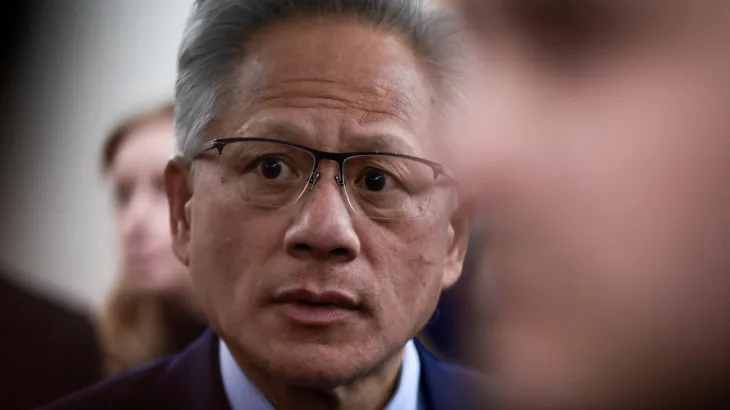
Nvidia co-founder Jensen Huang has resigned as president, chief executive officer and a member of the company's board amid growing scrutiny over his reported relationship with a Singapore-based businesswoman suspected by US officials of having links to Chinese intelligence.
The technology giant announced the leadership change on November 12, 2026, naming its long-serving Chief Financial Officer, Colette Kress, as interim CEO while the board begins searching for a permanent successor.
The departure follows an escalating controversy involving Nvidia's business relationships in Asia, allegations of attempts to divert advanced artificial intelligence chips to China, and questions about the company's exposure to foreign intelligence operations.
Colette Kress Takes Over as Interim CEO
In its announcement, Nvidia confirmed that Huang's resignation took effect immediately.
Kress, who joined Nvidia in 2013, will continue serving as executive vice-president and chief financial officer while leading the company on an interim basis. The board also appointed longtime director Harvey C. Jones as its first-ever board chair.
The appointments were formally disclosed in a regulatory filing with the US Securities and Exchange Commission.
The leadership transition places responsibility for steering one of the world's most influential artificial intelligence companies on Kress as investors and industry observers assess the implications of Huang's departure.
Alice Huang and the China Chip Controversy
The controversy centres partly on Alice Huang, also known as Huang Le, a Singapore-based businesswoman and former executive linked to Megaspeed International, a data-centre and cloud-computing company.
US officials reportedly suspected that Alice Huang was connected to Chinese intelligence and sought to influence Nvidia's access to the Chinese market. Reports also described a personal relationship between her and Jensen Huang. The two are not related.
Investigators have examined Megaspeed's business activities and whether advanced computing servers containing restricted Nvidia chips were routed through intermediary companies and other destinations before potentially reaching China.
The allegations have raised questions about export-control compliance and whether commercial networks could have been used to circumvent restrictions on advanced semiconductor technology.
However, the claims should not be treated as proof that Jensen Huang personally authorised illegal chip shipments or that Nvidia's confidential technology was compromised.
Singapore Investigation Adds Another Dimension
Singaporean authorities have also investigated Alice Huang and Megaspeed over suspected false declarations involving server purchases and exports.
According to the Singapore government, investigators examined whether servers were purchased and shipped through Singapore and Malaysia before being sent to destinations different from those declared.
Authorities said they found insufficient evidence to establish that Alice Huang had committed the suspected offences. However, she received a stern warning and was barred from returning to Singapore after officials concluded that she may have provided inaccurate information about her role at Megaspeed.
Singapore's investigation focused on suspected commercial and export-related offences, not espionage. The distinction is important because allegations of intelligence activity reported in the United States have not been established as a criminal finding by Singaporean authorities.
Nvidia Shares Come Under Pressure
Huang's resignation triggered a sharp reaction in financial markets, with Nvidia shares falling significantly during trading on November 12.
The development added to investor concerns about the company's leadership, its exposure to geopolitical tensions and the future of its business in China.
Nvidia's board had previously announced an independent investigation into reports that Huang may have been targeted by a foreign intelligence effort. The company said it had no reason to believe that national security or Nvidia's trade secrets had been compromised, while confirming that the review would examine the available information.
US lawmakers have also sought answers from Huang about his interactions with Alice Huang and the company's security and export-control procedures.
What Happens Next for Nvidia?
Huang's exit marks a major leadership change for the company he co-founded and transformed into a global leader in graphics processing and artificial intelligence chips.
The board has begun looking for a permanent CEO, while Kress is expected to maintain the company's operations, customer commitments and product development plans during the transition.
The controversy also places renewed attention on the wider international debate over access to advanced AI chips, particularly amid US efforts to restrict China's ability to obtain technology considered strategically important.
For Nvidia, the immediate challenge will be maintaining confidence among investors, customers and regulators while addressing questions surrounding its China business and corporate oversight.




Comments (0)
No comments yet.
Only registered readers can comment.
Sign in or create a free account to join the discussion.