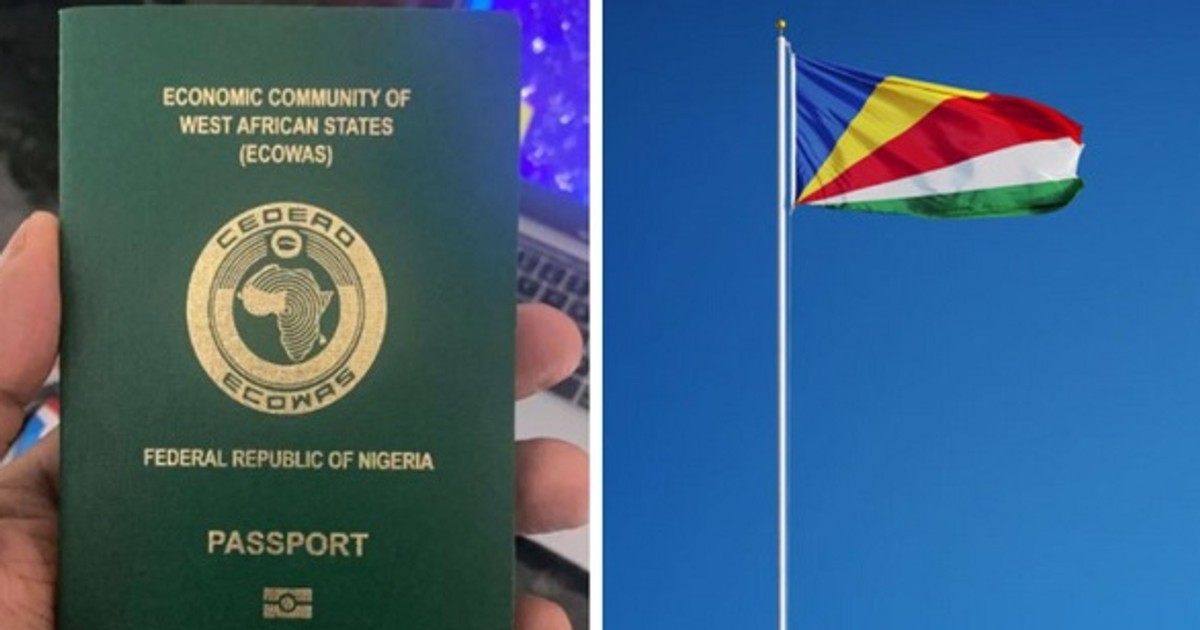
A Nigerian woman has sparked an online discussion after sharing a video describing what she says was an uncomfortable experience with immigration officials during her visit to Seychelles.
In the video, the traveller recounts facing intense scrutiny at the airport, prompting questions about how Nigerian passport holders are treated when travelling to the Indian Ocean island nation.
She also said her tour guide informed her that Nigerians were the largest group of foreign nationals imprisoned in Seychelles for drug-related offences. However, that claim has not been independently verified through publicly available prison statistics.
Her account has reignited conversations about the balance between national security measures and the fair treatment of legitimate international visitors.
Why Seychelles has tightened scrutiny of Nigerian travellers
The controversy has historical context.
In July 2023, Seychelles Vice-President Ahmed Afif publicly addressed concerns about drug trafficking and financial fraud involving some Nigerian nationals.
At the time, Afif said authorities had arrested 13 Nigerians attempting to enter the country with drugs within a two-week period.
He also referred to an alleged incident involving 62 Nigerian nationals accused of using fraudulent credit cards at tourism establishments, resulting in financial losses for businesses.
Following these incidents, the Seychelles Cabinet requested that immigration authorities exercise greater scrutiny when processing entry applications from Nigerian travellers.
The government explained that its concerns were related to specific criminal activities and were not intended to target Nigerians as a nationality.
What Seychelles officials said about the restrictions
Afif said the country's electronic border screening system would examine travel applications more carefully, particularly where the circumstances surrounding a proposed visit raised concerns.
He cited examples of travellers claiming to visit Seychelles for very short holidays while their travel expenses appeared to have been funded through a common source.
Authorities considered such patterns potentially indicative of organised criminal activity.
The Vice-President also clarified that Nigerians holding diplomatic passports, valid work permits or residence permits issued by Seychelles would be allowed to enter under the arrangements described at the time.
The announcement followed social media controversy over reports that Nigerian passport holders were being refused entry for tourism purposes.
Seychelles officials subsequently acknowledged that communication surrounding the screening measures had created confusion.
Nigerians divided over the tourist's experience
The woman's video has prompted different reactions among social media users.
Some Nigerians have expressed concern that innocent travellers could face unnecessary questioning or suspicion because of criminal activities committed by other individuals.
They argue that immigration officials should assess visitors based on their individual travel documents, circumstances and conduct rather than making assumptions based on nationality.
Others have called on Nigerians to confront criminal activities committed by fellow citizens abroad, arguing that such incidents can damage the country's international reputation and make travel more difficult for legitimate visitors.
The discussion has also raised broader questions about the responsibility of governments to protect their borders while ensuring that immigration procedures remain fair and respectful.
Security concerns versus fair treatment of travellers
Seychelles is a major tourism destination whose economy depends heavily on international visitors. Authorities have a responsibility to prevent drug trafficking, financial fraud and other criminal activities that could threaten public safety and the tourism industry.
At the same time, stronger border screening should not automatically translate into treating every traveller from a particular country as a potential criminal.
For Nigerian tourists planning to visit Seychelles, the incident serves as a reminder to ensure that travel documents, accommodation arrangements, return tickets and evidence of sufficient funds are readily available.
Ultimately, the debate highlights the importance of distinguishing between legitimate immigration checks and discriminatory treatment, while ensuring that criminal activity is addressed through evidence-based law enforcement rather than nationality-based assumptions.


Comments (0)
No comments yet.
Only registered readers can comment.
Sign in or create a free account to join the discussion.