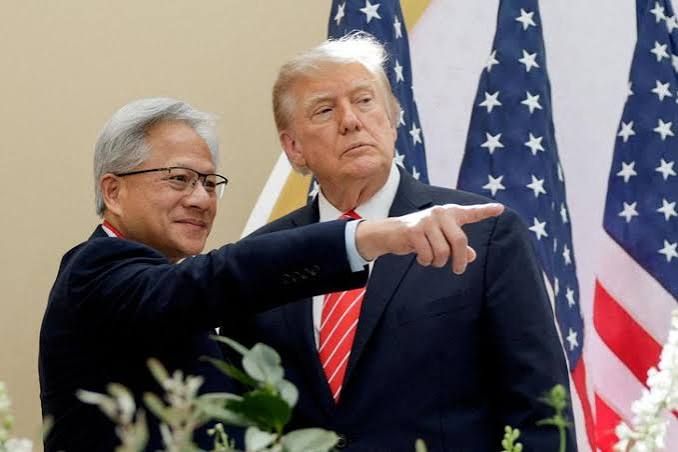
US President Donald Trump has called on Nvidia to consider reinstating its former chief executive, Jensen Huang, arguing that the technology company should accept an apology and give the billionaire businessman another opportunity to lead the artificial intelligence chipmaker.
Speaking to reporters at the White House on Friday, November 20, Trump praised Huang's contribution to America's technological leadership and suggested that Nvidia would benefit from bringing him back.
"I'd like to see Jensen make a big apology and go back," Trump said.
He added that the company would be making a smart decision if it accepted Huang's apology and allowed him to return to work.
"I think the company, if they were smart, they'd take that brilliant man, accept an apology, and let him go back to work," the president said.
Trump described Huang as one of the world's most brilliant minds and argued that the United States should protect individuals whose technological achievements strengthen its global competitiveness.
Trump Praises Huang's Contribution to US AI Leadership
The president's latest comments reinforce his support for Huang's potential return to Nvidia following the former CEO's departure earlier this month.
Trump credited Huang with helping place the United States significantly ahead of international competitors in advanced semiconductor technology.
He particularly highlighted Nvidia's Blackwell artificial intelligence chip platform, which has become an important part of the company's position in the global AI computing market.
Trump argued that Huang's technical leadership and experience would be difficult for the company to replace.
He also described the situation as an opportunity for a second chance, suggesting that personal mistakes should not necessarily erase the contributions of an individual with exceptional technical abilities.
Why Jensen Huang Left Nvidia
Huang's departure followed reports about alleged extramarital relationships, including one involving Alice Huang, a Chinese national and former executive associated with Singapore-based technology company Megaspeed International.
The relationship attracted scrutiny amid allegations that the woman may have links to Chinese intelligence.
However, the espionage allegations have not been publicly established as proven facts. US officials have also cautioned against treating the accusation as confirmed.
The controversy raised questions about potential national security implications, particularly because Nvidia produces some of the world's most advanced AI processors and operates within a highly sensitive international technology market.
The company has also faced scrutiny over concerns involving the possible diversion of advanced AI chips to restricted Chinese customers.
Trump has previously questioned whether Alice Huang was actually a Chinese spy and dismissed suggestions that his relationship with Nvidia's former chief executive had compromised US national security.
Nvidia Board's Position Remains a Major Obstacle
Despite Trump's public support, Huang's return is far from guaranteed.
Reports published earlier this week indicated that Nvidia's board was not considering reinstating him as chief executive and was moving forward with plans to identify new leadership.
That position presents a significant obstacle because the decision ultimately rests with the company's board rather than the US president.
Trump's comments also differ from the position expressed by Treasury Secretary Scott Bessent, who previously called for a major leadership shake-up at Nvidia and suggested that the company should consider an external candidate.
The disagreement highlights differing views within the Trump administration about how Nvidia should respond to the controversy and protect its position in the global semiconductor industry.
Silicon Valley Figures Back Huang's Return
Trump is not the only prominent figure supporting the possibility of Huang returning to Nvidia.
Several influential technology executives and investors have expressed support for his leadership, with an online campaign calling for the company to reconsider his departure.
Tesla and SpaceX chief executive Elon Musk has also backed the campaign.
Supporters argue that Huang's experience, technical knowledge and role in building Nvidia into a major force in artificial intelligence make his potential return worth considering.
However, questions surrounding corporate governance, national security and the company's long-term leadership remain central to the debate.
What Happens Next?
Trump's latest intervention places additional public pressure on Nvidia as the company navigates a leadership transition and scrutiny surrounding its business relationships.
For now, there has been no confirmed announcement that the board intends to reinstate Huang.
Whether he returns will depend on the company's internal decision-making process and how the outstanding concerns surrounding his departure are resolved.
The situation also illustrates how closely artificial intelligence leadership has become connected to US economic and national security interests, particularly as Washington and Beijing compete for dominance in advanced computing technology.


Comments (0)
No comments yet.
Only registered readers can comment.
Sign in or create a free account to join the discussion.