US Treasury Secretary Scott Bessent has warned about the potential dangers posed by advanced Chinese artificial intelligence models, while outlining new understandings between Washington and Beijing on the military use of AI following President Donald Trump's meeting with Chinese President Xi Jinping.
Speaking to CNBC after returning from Trump's Asia trip, Bessent said the two leaders agreed that humans must remain involved in military decisions involving artificial intelligence and that AI systems should not independently initiate major military operations.
The understanding represents an important area of cooperation between the two countries, even as they continue competing for leadership in advanced AI technology.
Bessent described the agreement as one of the significant outcomes of Trump's engagement with Xi in Shenzhen, China, on the sidelines of the Asia-Pacific Economic Cooperation (APEC) summit.
Trump and Xi Agree on Human Control Over Military AI
According to Bessent, both leaders recognised the importance of maintaining human oversight over decisions involving AI in military operations.
He said the technology should not be permitted to autonomously launch major military actions without human involvement.
The principle is intended to reduce the risks associated with increasingly powerful AI systems, particularly in situations where automated decisions could trigger military escalation or create unintended consequences.
The agreement comes amid growing international debate about the use of artificial intelligence in weapons systems, military planning, cyber operations and national security.
Although AI can support military intelligence and operational decision-making, concerns remain about allowing machines to independently make decisions with potentially devastating consequences.
US Raises Concerns About Chinese AI Models
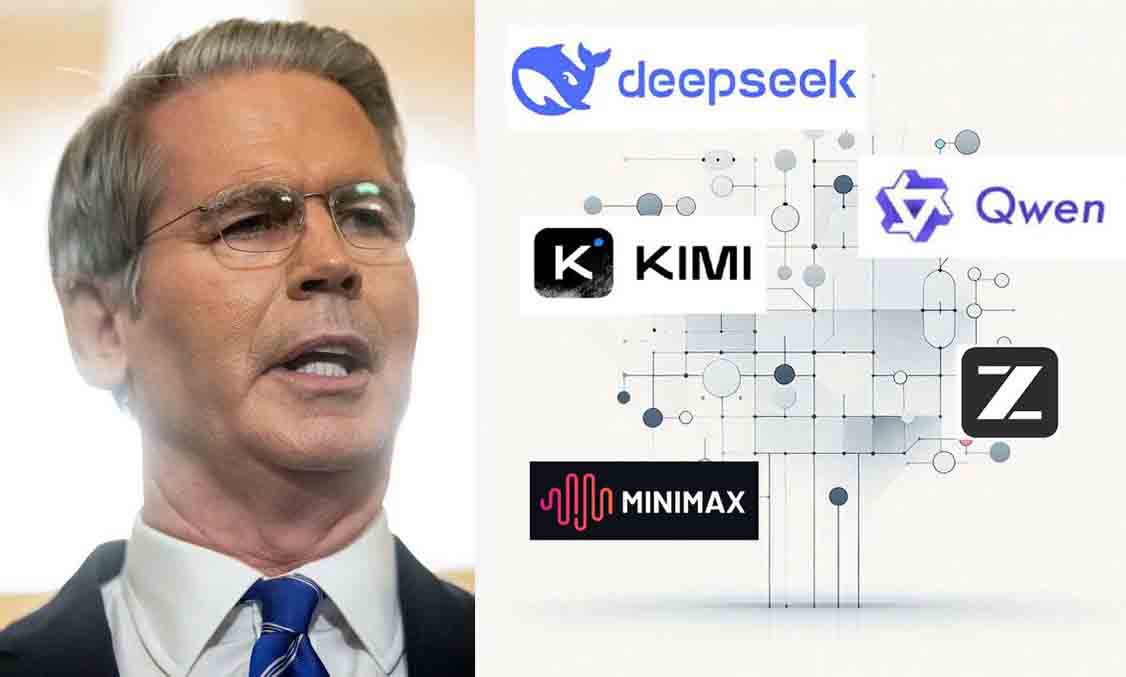
Bessent also expressed concern about the capabilities of Chinese-developed AI models, describing some as dangerous because of their potential use in cyberattacks.
He argued that maintaining America's technological advantage in artificial intelligence remains an important part of protecting US national security.
According to the Treasury Secretary, the United States must continue supporting its AI laboratories and maintaining leadership in advanced model development.
His remarks reflect Washington's broader concerns about the security implications of powerful AI systems that can be accessed, adapted and deployed by different users.
Chinese AI companies have become increasingly competitive in developing advanced models, including systems made available through open-source or openly accessible releases.
Such models can expand access to AI technology, but their capabilities and safeguards have also become subjects of international security discussions.
US and China Plan AI Safety Discussions
Beyond the agreement on military decision-making, Washington and Beijing have been developing a framework for discussing the risks associated with advanced artificial intelligence.
Bessent had previously outlined plans for the two countries to exchange information about serious AI-related incidents through a direct communication channel.
The proposed arrangement is intended to allow both governments to alert each other when an AI-related development creates a significant security concern.
The countries are also expected to exchange best practices for evaluating and testing advanced AI models before they are released.
These discussions could cover how powerful systems are assessed for potential security risks, how dangerous capabilities are identified and what safeguards should be considered before deployment.
The initiative builds on an earlier understanding reached during Xi's September 2026 visit to Washington, when the two governments agreed to establish a communication mechanism for AI-related incidents.
Bessent Says US Wants to De-Risk, Not Decouple From China
Despite the growing competition over artificial intelligence, Bessent pushed back against suggestions that Washington wants to completely separate the American and Chinese economies.
He reiterated the US position that the objective is to "de-risk, not to decouple" economic relations with China.
The approach involves reducing vulnerabilities in sensitive supply chains and protecting strategic technologies while maintaining economic engagement in areas where cooperation remains possible.
Bessent has argued that both countries must recognise their differences while identifying areas where shared interests require cooperation.
Artificial intelligence has increasingly become part of this balancing act, with the two governments seeking to manage potential security threats while competing to develop more advanced technology.
AI Competition Remains Central to US-China Relations
The latest discussions highlight the complicated relationship between Washington and Beijing.
Both countries recognise the economic and strategic importance of artificial intelligence, but they differ over technology access, export restrictions, national security and the pace of development.
The United States continues to restrict China's access to some advanced AI semiconductor technology.
Bessent said Nvidia's H200 remains the most advanced AI chip Chinese buyers can purchase under the applicable licensing arrangements. He also suggested that Chinese orders had remained limited as Beijing works to develop its domestic semiconductor capabilities.
He said the Trump administration was committed to maintaining appropriate restrictions, including measures addressing access to advanced computing resources through overseas data centres.
For now, the AI understandings reached by Trump and Xi provide a framework for further discussions rather than a comprehensive agreement governing military AI or the development of advanced models.
Whether the proposed safeguards lead to enforceable rules and sustained cooperation will depend on how both governments implement the commitments.



Comments (0)
No comments yet.
Only registered readers can comment.
Sign in or create a free account to join the discussion.