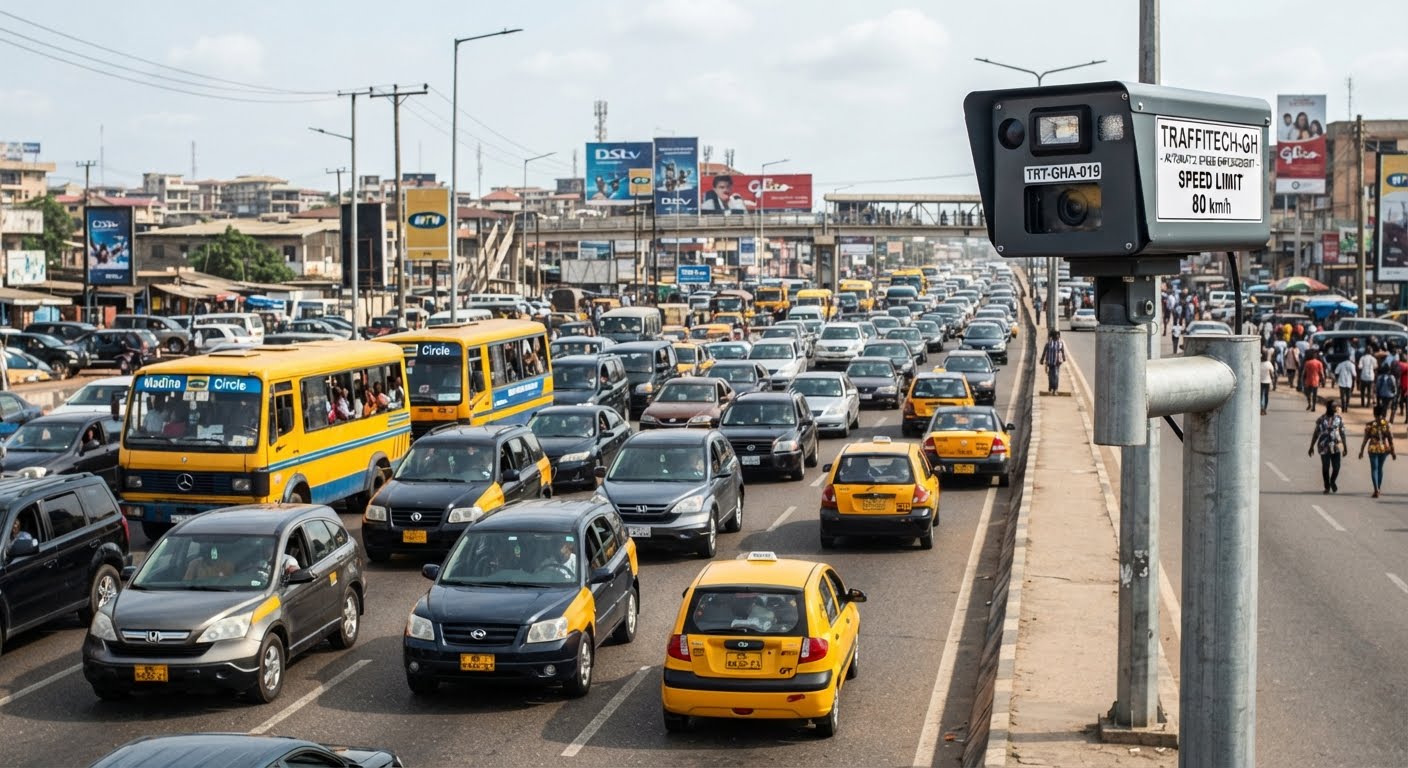
ACCRA — On Ghana's roads this week, the speedometer is getting more attention than usual.
Since the police switched on TraffiTech-GH, the country's new automated speed enforcement system, on Sunday, November 1, 2026, many motorists have been easing off the accelerator. The reason is simple: a speeding fine can now arrive by SMS, with photo and video evidence, without a police officer ever stopping the car.
The system, run by the Police Motor Traffic and Transport Department (MTTD), uses cameras in police vehicles, tripod-mounted cameras and sensors to catch drivers who break the speed limit. Its legal backing comes from Regulation 242 of the Road Traffic Regulations, L.I. 2519.
For now, it targets speeding only. The police say offences such as running red lights, dangerous overtaking and tailgating will be added at a later stage, while other offences continue to be handled by officers on the road.
The speed limits you must know
- 30 km/h: near schools, playgrounds, hospitals and clinics, churches, mosques, markets, shopping centres, processions and other busy pedestrian areas
- 50 km/h: towns and other built-up areas
- 90 km/h: highways
- 100 km/h: motorways
One important warning: the absence of a speed limit sign is not a defence. Drivers are expected to know the general limit for the type of road they are on.
Fines and deadlines
- How much: fines are set on a sliding scale of 20 to 40 penalty units, roughly GH¢240 to GH¢480, depending on how far over the limit a driver was going.
- Who gets the notice: the registered owner of the vehicle, by SMS from the sender ID GPS-MTTD.
- Time to act: 14 days to pay or to contest the notice online. Contesting sends the case to court, where the police must prove their evidence.
- Paying late: after 14 days, a penalty of 1% of the original fine is added for every day it remains unpaid, and outstanding fines can block transactions at the DVLA.
- How to pay: through the official government platform at www.ghana.gov.gh, using mobile money or a bank card, or through the police's official TraffiTech-GH portal using the ticket number on your notice.
How drivers are reacting
The early mood on the roads is cautious. Broadcaster Saddick Adams is among those who have described how drivers on Accra's roads are changing their behaviour for fear of the cameras.
Some drivers are trying to stay one step ahead. They have mapped more than 100 camera locations across Accra and Kumasi on navigation apps, and the police have warned against attempts to evade the system.
Commercial drivers are more critical. Several transport unions have announced a withdrawal of services on Wednesday, November 4, arguing that traders occupying bus stops leave them no safe place to stop, exposing them to fines.
Do the cameras work?
The police say the signs are encouraging. During the pilot phase, road crashes fell from 1,108 in September 2025 to 1,003 in September 2026, according to figures presented by the police in October. Officers say they expect the full rollout to cut crashes, injuries and deaths further.
Tips for drivers
- Keep to the limit everywhere, not just where you think a camera might be. Cameras can be mobile.
- Slow to 30 km/h near schools, hospitals, markets and places of worship, even if there is no sign.
- Check your vehicle registration details with the DVLA, especially your phone number, so notices reach you.
- If you own a vehicle that others drive, keep track of who is behind the wheel. The notice comes to you.
- Act within 14 days to avoid the daily 1% penalty.
- Beware of scams. Only trust notices from the official sender ID GPS-MTTD, and never pay through links or numbers sent by unknown parties.
What to watch
- whether the drivers' strike on November 4 goes ahead
- when red-light, overtaking and tailgating enforcement is added
- early data on fines issued and changes in road crashes




Comments (0)
No comments yet.
Only registered readers can comment.
Sign in or create a free account to join the discussion.