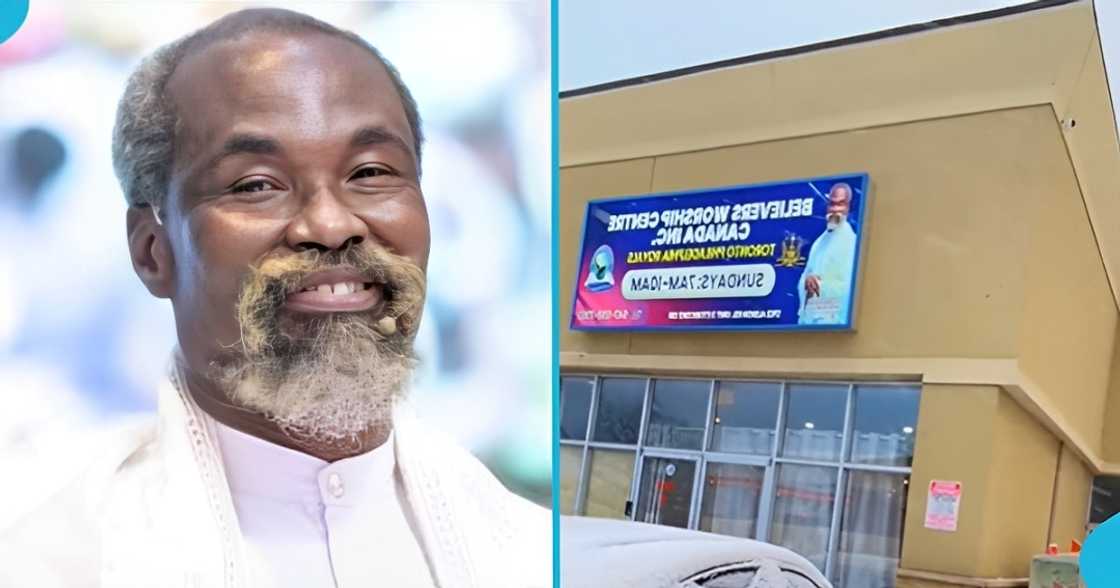
Ghanaian preacher Prophet Stephen Adom Kyei-Duah has sparked fresh public debate after suggesting that members who attend his church without purchasing products sold by his ministry could eventually be denied entry.
In a video circulating on social media, the founder and leader of the Believers Worship Centre, popularly known as the Philadelphia Movement, is heard warning congregants that they may not be allowed into the church if they have not bought some of the products associated with his ministry.
Among the items he mentioned were Grace Soap, Sobolo, Yesu Mogya and other products marketed through the church. He also displayed some of the merchandise and mentioned their respective prices during the service.
His comments have attracted attention online, with Ghanaians expressing differing opinions about the relationship between religious worship, commercial activities and the sale of spiritually associated products.
Prophet Lists Products Sold Through His Ministry
During the service, Adom Kyei-Duah presented several products associated with the Philadelphia Movement and indicated that purchasing them could become a condition for entering the church.
The products include Yesu Mogya, a sobolo-based drink, and Grace Soap, among other items.
Yesu Mogya, which translates as "Blood of Jesus", has previously attracted public discussion because of the spiritual significance some members associate with it.
The prophet has previously clarified that the drink should not be regarded as medicine. Its spiritual significance, as described by him and some followers, is separate from scientifically established medical treatment.
However, the latest remarks have raised questions about whether members should be expected to purchase ministry products as a requirement for participating in worship services.
Ghanaians Debate Whether Church Products Should Determine Access to Worship
The video has generated debate across social media, with some users questioning the idea of making purchases a condition for entering a place of worship.
Critics have drawn comparisons with the biblical account in which Jesus drove merchants and money changers out of the temple, arguing that churches should remain places where people can worship without commercial pressure.
Others have questioned whether members who cannot afford the products could be excluded from attending services.
Some commentators, however, have argued that religious organisations need financial resources to maintain their facilities and support their activities. They see the sale of ministry-branded products as one possible source of income, although they have also raised questions about whether purchases should be compulsory.
The debate has therefore extended beyond the products themselves to issues of religious freedom, financial expectations and the responsibilities of church leadership.
Previous Controversies Over Philadelphia Movement Products
Adom Kyei-Duah and the Philadelphia Movement have previously attracted public attention over the sale and spiritual presentation of products such as Yesu Mogya.
The practice has generated disagreements among religious commentators and sections of the public, particularly over claims and expectations surrounding the products.
In 2025, the sale of spiritual products associated with the church also became a subject of public discussion after videos circulated showing members displaying items they had purchased.
The latest remarks have renewed those conversations, particularly because of the suggestion that purchasing products could influence access to church services.
Questions Over the Future of the Directive
It remains unclear whether the prophet's statement represents an immediate and formally implemented church policy or a warning about a possible future arrangement.
The circulating video has not, by itself, established whether the church has introduced a written rule requiring every member or visitor to purchase its products before attending worship.
The church's official position on the reported directive would be important in clarifying how the statement should be understood.
For now, the episode has reopened a wider conversation in Ghana about the commercialisation of religious activities and whether the sale of spiritual products should ever become a condition for accessing worship.




Comments (0)
No comments yet.
Only registered readers can comment.
Sign in or create a free account to join the discussion.