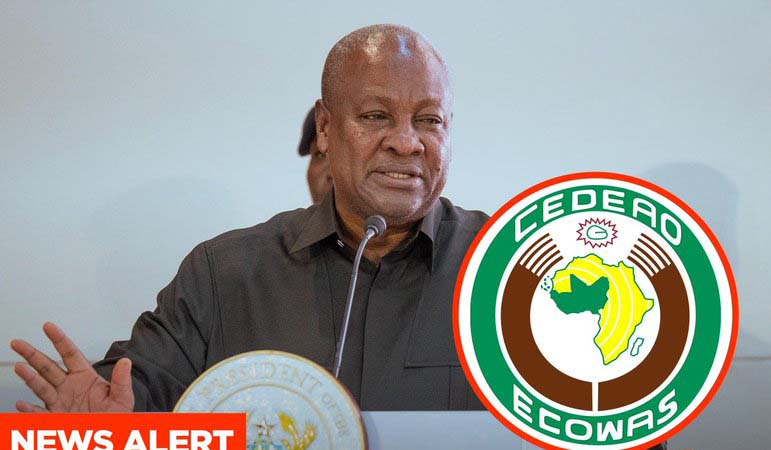
President John Dramani Mahama has urged West African countries to strengthen electricity connections, remove trade barriers and accelerate economic integration, arguing that regional cooperation is essential to reducing business costs and supporting industrial development.
Speaking at the inaugural West Africa Integration and Investment Summit (WAIIS) in Freetown, Sierra Leone, on Wednesday, November 18, 2026, Mahama proposed increasing cross-border electricity trade from its current level of approximately 7 per cent to nearly 30 per cent within five years.
The summit, convened by Sierra Leonean President Julius Maada Bio, brought together political leaders, investors, financial institutions and business executives to discuss investment opportunities and practical ways of advancing economic cooperation across the sub-region.
Mahama targets major increase in regional electricity trade
Mahama said West African countries could reduce electricity costs and improve power reliability by connecting their national grids and allowing countries with surplus electricity to supply neighbouring markets.
He argued that individual countries did not need to independently construct every type of power-generation facility when regional resources could be shared through an integrated electricity network.
The President disclosed that electricity traded through the West African Power Pool currently accounts for approximately 7 per cent of the region's electricity market.
He believes this could increase to nearly 30 per cent within five years if governments invest in the transmission infrastructure needed to connect national grids.
Mahama also indicated that Ghana's expanding gas resources and investments in thermal power generation could position the country to supply approximately 2,000 megawatts of surplus electricity to the regional market.
However, he warned that generation capacity alone would not be sufficient without adequate transmission connections to deliver electricity to neighbouring countries.
He stressed that affordable and reliable energy was essential for industrialisation, manufacturing and economic expansion.
Ghana spends $3 billion annually on food imports
The President also raised concerns about Ghana's dependence on imported food, disclosing that the country spends approximately US$3 billion annually on food products, including rice and poultry.
He argued that the import bill represents economic value that could instead support local farmers, processors, manufacturers and businesses.
Mahama called for increased investment in domestic agricultural production and food processing to reduce the country's dependence on imported commodities.
He questioned why Ghana continued to import large quantities of poultry despite having the agricultural potential to produce more locally.
The President maintained that strengthening local production would create employment, support rural economies and ensure that more of the country's spending remained within the domestic economy.
His comments reinforced the importance of agribusiness and food-system development, one of the four major investment priorities highlighted at the summit.
Mahama proposes phased introduction of the ECO currency
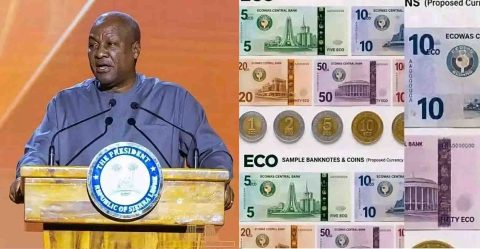
Mahama also renewed calls for progress towards the proposed ECO, the planned common currency for members of the Economic Community of West African States (ECOWAS).
He argued that the long-standing currency project had experienced repeated delays because of the requirement for all member states to meet agreed economic convergence criteria before implementation.
The President proposed allowing countries that are ready to adopt the currency to begin using it, while others join when they satisfy the necessary requirements.
According to him, the ECO could initially operate alongside existing national currencies, allowing participating countries to settle trade transactions without necessarily routing payments through the United States dollar.
Mahama disclosed that he and President Julius Maada Bio had presented a proposal at an earlier ECOWAS summit to allow willing countries to move ahead with the initiative.
He said a phased approach could help overcome the delays that have affected the regional monetary integration programme for decades.
The proposal does not mean the ECO has been launched. It remains a proposed arrangement requiring further regional agreement and implementation.
Trade barriers and infrastructure remain major challenges
Beyond electricity and monetary integration, Mahama called on West African governments to address the practical obstacles preventing businesses from trading efficiently across national borders.
He identified inadequate roads, ports, railways and border infrastructure as major constraints on regional commerce.
The President also called for the removal of unnecessary restrictions and barriers that delay the movement of goods and services between countries.
He pointed to the slow progress of the proposed Abidjan-Lagos corridor, a major coastal highway project intended to improve transport connections among West African countries.
Mahama argued that the region must move beyond declarations and accelerate the implementation of infrastructure projects that have been discussed for many years.
He also stressed the importance of tackling corruption, strengthening the rule of law and maintaining predictable economic policies to build investor confidence.
According to him, investors require reliable institutions, transparent processes and confidence that their investments will be protected.
Summit presents more than $180 billion investment pipeline
The West Africa Integration and Investment Summit was convened under the leadership of President Julius Maada Bio as a platform for connecting regional development priorities with investors and financial institutions.
The event, held from November 16 to 18, 2026, focused on four major investment areas: energy and industrialisation, strategic minerals, agribusiness and food systems, and digital transformation.
Organisers highlighted an investment pipeline exceeding US$180 billion across the four pillars, alongside a regional market of more than 450 million people.
The summit was designed to facilitate investment partnerships, project financing and cooperation between governments and private-sector organisations.
Its organisers also indicated that commitments made during the gathering would be tracked through the summit's secretariat to encourage progress beyond the event.
The investment pipeline represents opportunities being presented and developed, rather than US$180 billion in completed or guaranteed investment deals.
Mahama urges leaders to turn regional integration into action
Mahama's address placed emphasis on the need for West African governments to translate decades of regional integration commitments into measurable economic progress.
He argued that improved electricity connections, transport infrastructure, agricultural production and trade arrangements could help businesses operate more efficiently across national boundaries.
The President also called for stronger collaboration among governments, private investors, development finance institutions and regional organisations.
With a combined population exceeding 450 million, West Africa represents a significant market for manufacturers, agricultural producers, technology companies and investors.
However, realising that potential will depend on governments addressing infrastructure gaps, reducing trade restrictions and building institutions capable of supporting long-term economic cooperation.
The summit therefore presents an opportunity for regional leaders to move beyond political commitments and focus on projects that can improve trade, create jobs and strengthen economic ties across West Africa.

Comments (0)
No comments yet.
Only registered readers can comment.
Sign in or create a free account to join the discussion.