
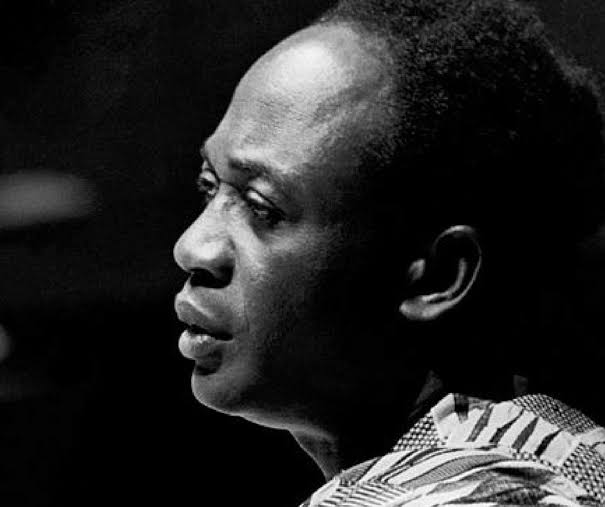
Every Ghanaian knows Osagyefo Dr Kwame Nkrumah as the man who led the Gold Coast to independence on March 6, 1957. But behind the famous speeches and statues is a life full of surprising twists, from humble jobs in America to a dramatic election win from a prison cell.
As the nation mourns his son, journalist Gamal Gorkeh Nkrumah, who died in Cairo this week, here are 10 lesser-known facts about the father of Ghana's independence.
1. "Kwame Nkrumah" was not his birth name
Nkrumah was born in Nkroful, in today's Western Region, and was baptised Francis Nwia Kofi Ngonloma. Even his year of birth is uncertain: most sources say 1909, but some records point to 1912.
For years he was known as Francis Nkrumah. He adopted the name Kwame in 1945, the name history now remembers.
2. He was a teacher before he was a politician
Before politics, Nkrumah trained as a teacher at the Government Training College in Accra, which later became part of Achimota College. He went on to teach at Catholic schools in Elmina and Axim, and at a seminary at Amissano.
It was during these years that he grew interested in politics and decided to further his education abroad.
3. He worked menial jobs to survive in America
In 1935, Nkrumah travelled to the United States, where he spent about 10 years studying. He earned degrees from Lincoln University in Pennsylvania and the University of Pennsylvania, in subjects including economics, sociology, theology, philosophy and education.
Life was far from easy. To pay his way, he took on hard, low-paid jobs, including working in a soap factory and as a dishwasher on ships. He also preached in Black churches. Those years exposed him to racism in America and to the ideas of Black leaders such as Marcus Garvey, which shaped his Pan-African vision.
4. He helped organise a historic Pan-African meeting in England
In 1945, Nkrumah moved to London. That October, he helped organise the Fifth Pan-African Congress in Manchester, working alongside Trinidadian activist George Padmore. The meeting, attended by the respected African American scholar W.E.B. Du Bois, brought together future leaders from across Africa and the diaspora and demanded independence for colonised nations.
Many historians see it as a turning point in Africa's march to freedom.
5. He won an election while sitting in prison
In 1950, the colonial authorities jailed Nkrumah for leading "Positive Action", a campaign of strikes and non-violent protest. He was held at James Fort Prison in Accra.
Then came the 1951 general election. His Convention People's Party (CPP), which he had founded in 1949, won a landslide, and Nkrumah himself won the Accra Central seat while still behind bars. The British governor released him to become Leader of Government Business. In 1952, he became Prime Minister.
6. He survived a bomb attack at Kulungugu
On August 1, 1962, a grenade was thrown at Nkrumah at Kulungugu, in today's Upper East Region, as he returned from a meeting in Upper Volta (now Burkina Faso). Several people were killed or injured, but Nkrumah survived with injuries.
The Kulungugu attack was one of several assassination attempts against him, and it marked a hardening of his rule in the years that followed.
7. He was overthrown while on a trip abroad
On February 24, 1966, the military and police overthrew Nkrumah's government. He was not even in Ghana at the time. He was in Beijing, China, on his way to Hanoi, Vietnam, on a mission he hoped would help end the Vietnam War.
He never returned to Ghana alive.
8. Guinea made him its "co-president"
After the coup, Nkrumah went into exile in Guinea. His close ally, Guinean President Ahmed Sékou Touré, welcomed him and named him honorary co-president of Guinea, a remarkable gesture of Pan-African solidarity.
Nkrumah spent his last years in Conakry, writing books and continuing to campaign for African unity.
9. He died in Romania and was buried three times
Nkrumah died of cancer on April 27, 1972, in Bucharest, Romania, where he had gone for treatment.
His body then made a long journey. He was first buried in Conakry, Guinea. Months later, his remains were returned to Ghana and buried in his hometown of Nkroful. In 1992, he was finally laid to rest at the Kwame Nkrumah Memorial Park and Mausoleum in Accra, on the site where he declared Ghana's independence.
10. Africans voted him "Man of the Millennium"
Decades after his death, Nkrumah's influence remains enormous. In a 1999–2000 poll by the BBC World Service, listeners across Africa voted him Africa's Man of the Millennium, ahead of other great African leaders.
The honour reflected his role not only in Ghana's independence, but in inspiring liberation movements across the continent and helping found the Organisation of African Unity (OAU) in 1963, the forerunner of today's African Union.
A legacy that lives on
From a teacher in Elmina to a world statesman, Nkrumah's life was full of contrasts, triumphs and controversy. His dream of a united Africa remains unfinished, but his story continues to inspire Ghanaians and Africans everywhere.

Comments (0)
No comments yet.
Only registered users can comment.
Sign in or create a free account to join the discussion.