
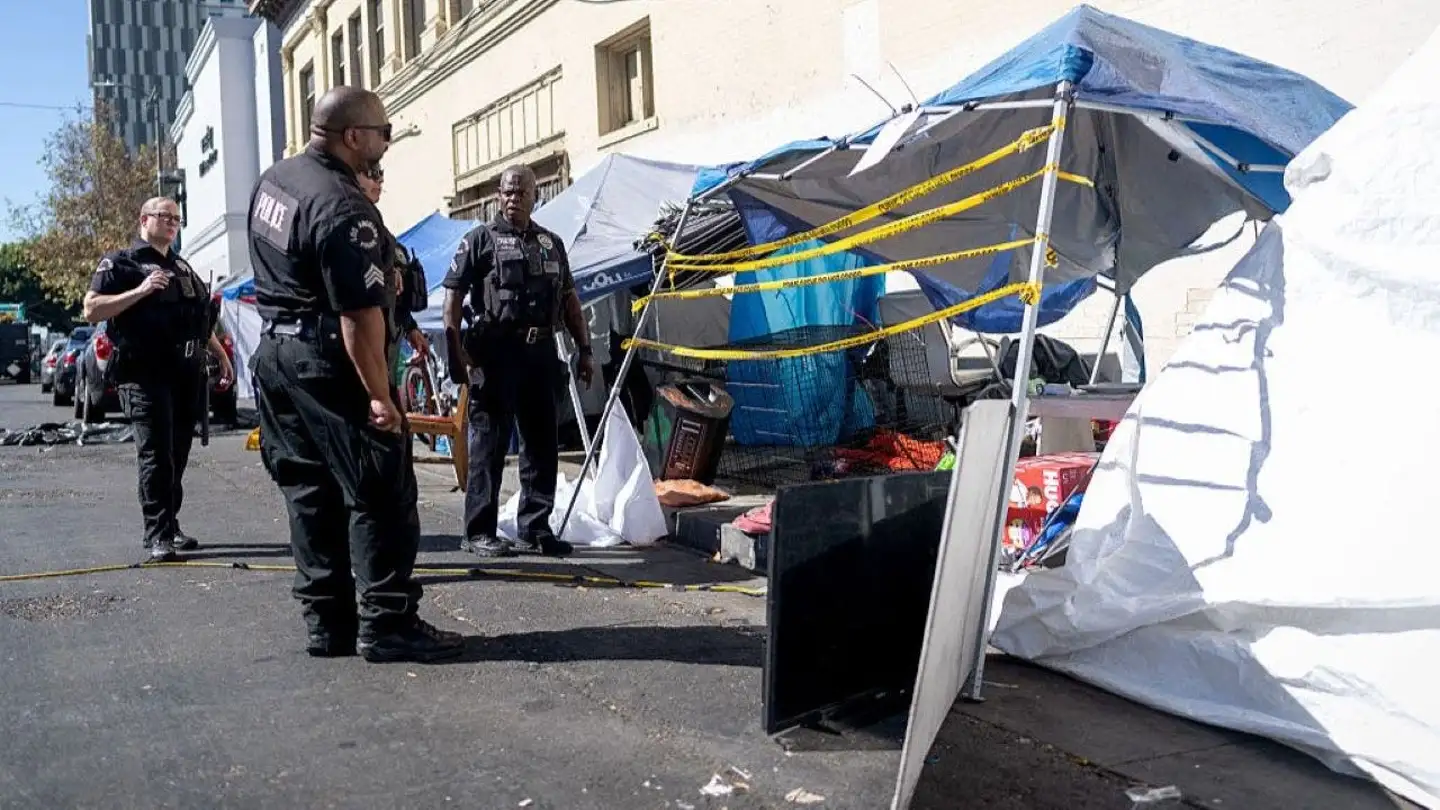
ST. LOUIS — A two-month federal crackdown on violent crime in St. Louis, Missouri, has ended with 435 arrests, according to the US Department of Justice (DOJ).
Announcing the results of Operation Show Me Justice on Thursday, October 15, 2026, Acting Deputy Attorney General Trent McCotter said officers had also seized:
- 80 kilograms of drugs
- 166 illegal firearms
- six machine gun conversion devices, which can turn ordinary handguns into automatic weapons
- more than US$1 million in cash linked to suspected illegal gun and drug deals
"We don't have to accept violent crime," McCotter told reporters in St. Louis.
How the operation worked
Operation Show Me Justice, named after Missouri's nickname, "the Show Me State", began in mid-August as an eight-week surge of federal and local law enforcement into St. Louis.
It was led by the Bureau of Alcohol, Tobacco, Firearms and Explosives (ATF), working with:
- the US Marshals Service
- the Drug Enforcement Administration (DEA)
- the US Attorney's Office for the Eastern District of Missouri
- the St. Louis Metropolitan Police Department
The teams focused on illegal guns, drug trafficking and repeat violent offenders, combining warrant arrests with gun tracing, ballistics analysis and drug investigations. Fox News, which joined agents on a ride-along, reported scenes of officers forcing entry into a St. Louis home with a battering ram, backed by a drone and a police dog.
What the numbers show
One figure stands out: of the 435 arrests, 412 were for outstanding warrants. That means about 19 in every 20 people arrested were already wanted by the authorities, rather than caught committing new crimes during the operation.
McCotter said many suspects had more than one warrant, and one had seven.
The DOJ said those arrested included people with histories of illegally possessing machine guns, carrying stolen firearms, resisting arrest, possessing guns as convicted felons and making straw purchases, which means buying a gun on behalf of someone who is not allowed to own one.
Who was there
McCotter announced the results alongside US Senator Eric Schmitt of Missouri, ATF Director Robert Cekada, US Marshals Service Director Gadyaces Serralta, St. Louis Police Chief Robert J. Tracy and Thomas C. Albus, the US Attorney for the Eastern District of Missouri.
Serralta described the results as unprecedented, saying they would benefit residents, commuters, students and visitors to the city.
Part of a wider push
St. Louis is not the only US city to see such a surge. McCotter pointed to similar federal operations in Washington, D.C., Memphis and Los Angeles, and urged mayors, governors and police chiefs elsewhere to seek federal partnerships of their own. He argued that violent crime is not an unavoidable part of city life where there is the political will to tackle it.
The debate
Supporters of these surges say they quickly take dangerous people and illegal guns off the streets. Critics and researchers often raise a different question: whether the effects last once federal agents leave, or whether crime simply moves elsewhere. Experts generally say the answer depends on what happens after the arrests, including prosecutions, sustained local policing and community investment.
The DOJ has not yet said how many of those arrested will face federal charges, or whether violent crime in St. Louis has fallen as a result of the operation.


Comments (0)
No comments yet.
Only registered users can comment.
Sign in or create a free account to join the discussion.