
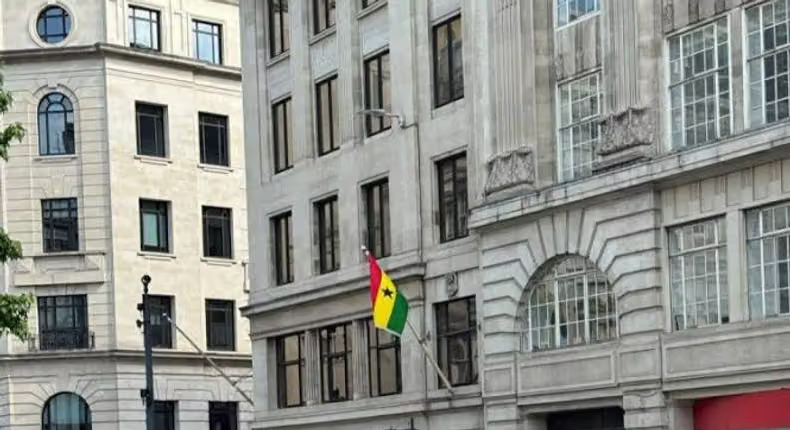
LONDON — Ghana's bank in the City of London is looking East. Ghana International Bank (GHIB) plans to attract more capital from Asia, betting that the region will become an increasingly important source of money for Africa's infrastructure, trade and agriculture.
Chief Executive Officer Ian Greenstreet set out the strategy in an interview with Reuters this week. He said Asia complements some of Africa's biggest needs, pointing to the region's deep pools of institutional savings that can be channelled into infrastructure projects.
He singled out China as an extremely important market for the bank.
What is Ghana International Bank?
Many Ghanaians have never heard of it, but GHIB has quietly served the country for more than six decades.
- Founded: 1959, growing out of a Ghana Commercial Bank project to give Ghana access to global markets
- Based in: London, where it is regulated by UK authorities
- Owned by: Ghanaian financial institutions, with the Bank of Ghana as majority shareholder
- What it does: acts as a bridge between African markets and the global financial system through trade finance, corporate and institutional banking, and treasury services
In simple terms, when African banks and businesses need to pay for imports, finance exports or reach international investors, GHIB is one of the banks that helps make it happen.
Why Asia?
Greenstreet's argument is straightforward. Africa needs huge amounts of long-term finance for roads, power, ports and farms. Asia has large institutional savers, such as pension funds and insurers, looking for places to invest. Bringing the two together could unlock funding that traditional Western lenders alone cannot provide.
The bet also follows the trade. Asian economies, led by China and India, are now among Africa's biggest trading partners, and much of Ghana's own export business already flows East.
Beyond cocoa
The strategy comes at a turning point for Ghana's biggest export crop. This month, the Ghana Cocoa Board (COCOBOD) raised money through domestic debt rather than the syndicated loans from international banks it had relied on for decades.
Greenstreet said there is still a role for international capital. GHIB also plans to scale up financing for other crops across Africa, such as cotton, widening its agricultural business beyond cocoa.
Building momentum
The Asia push builds on a string of recent partnerships aimed at expanding the bank's reach:
- African Development Bank (2026): GHIB became a confirming bank under the AfDB's Trade Finance Transaction Guarantee programme, which covers up to 100% of the non-payment risk on eligible trade deals from approved African banks
- British International Investment (2024): a US$50 million risk-sharing facility to support trade finance in Sierra Leone, Liberia, The Gambia, Benin, DRC, Rwanda and Tanzania
- Ghana Export-Import Bank: a partnership the CEO has described as a boost for export growth and job creation
What it means for Ghana
GHIB's turn towards Asia fits a wider shift in Ghana's economic relationships. The government has applied to join BRICS as a partner country, China is one of Ghana's largest export markets, and the Bank of Ghana is testing ways for businesses to pay Chinese suppliers directly in yuan.
For Ghanaian businesses, more Asian capital flowing through a Ghanaian-owned bank could mean more options for trade finance and project funding. For farmers, financing for crops beyond cocoa could open doors in sectors such as cotton.
What to watch
The bank has not yet named specific Asian partners, deals or funding targets. The key questions are which Asian institutions it signs up, how much money it raises, and which African projects benefit first.








Comments (0)
No comments yet.
Only registered users can comment.
Sign in or create a free account to join the discussion.