
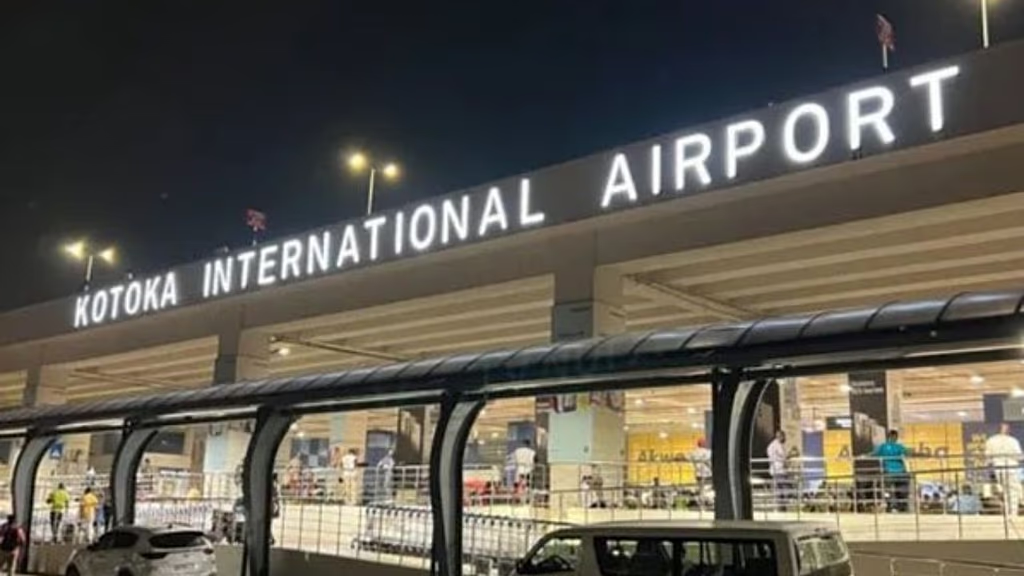
The Government of Ghana has renamed Kotoka International Airport, dropping the name of the military officer associated with the 1966 overthrow of Ghana’s first President, Kwame Nkrumah.
Officials say the facility will now revert to its earlier title, Accra International Airport, in what they describe as an effort to project a more neutral national identity. The decision has, however, reignited longstanding political and historical tensions across the country.
A Symbolic but Divisive Move
Transport authorities have framed the change as symbolic rather than operational, emphasising that aviation safety, travel procedures and airport services will remain unaffected.
According to government officials, restoring the airport’s original name aligns with Ghana’s democratic evolution and reflects the identity of the capital city, Accra.
However, the move has sharply divided public opinion, sparking debate about history, democracy and national recognition.
Kotoka’s Historical Role
The airport was named after Emmanuel Kwasi Kotoka, a senior army officer who played a key role in the 1966 coup that removed President Nkrumah from office.
Kotoka was later killed at the same airport during an attempted counter-coup in 1967. Two years after his death, the ruling military administration renamed the airport in his honour, portraying him as a figure who intervened against what it described as increasingly authoritarian rule.
Critics of the renaming argue that removing Kotoka’s name sidelines his role in Ghana’s history and disregards the recognition he received for his service. Some opposition voices say the decision could deepen regional sensitivities, noting that his legacy holds particular importance in parts of the country.
Supporters Cite Democratic Values
Supporters of the change, including sections of civil society, contend that honouring a coup leader conflicts with Ghana’s democratic values and the constitutional order restored after years of military rule.
The discussion has intensified since John Dramani Mahama returned to office following the 2024 elections, with many interpreting the renaming as part of a broader reassessment of Ghana’s political history.
Revisiting Ghana’s Political Past
The controversy has also revived broader debates about the circumstances surrounding Nkrumah’s removal. Scholars have long examined the international context of the coup, including alleged involvement by Western intelligence agencies during the Cold War era.
Nkrumah, who led Ghana to independence in 1957 and became a leading voice in the pan-African movement, was later criticised domestically for consolidating power. His overthrow ushered in a period of political instability marked by successive military takeovers until multiparty democracy was restored in 1992.
Today, Ghana is widely regarded as one of West Africa’s more stable democracies, known for competitive elections and peaceful transfers of power.
Yet the airport renaming debate underscores how the legacy of Ghana’s turbulent past continues to shape national conversations about identity, memory and the meaning of democracy.


Comments (0)
No comments yet.
Only registered users can comment.
Sign in or create a free account to join the discussion.